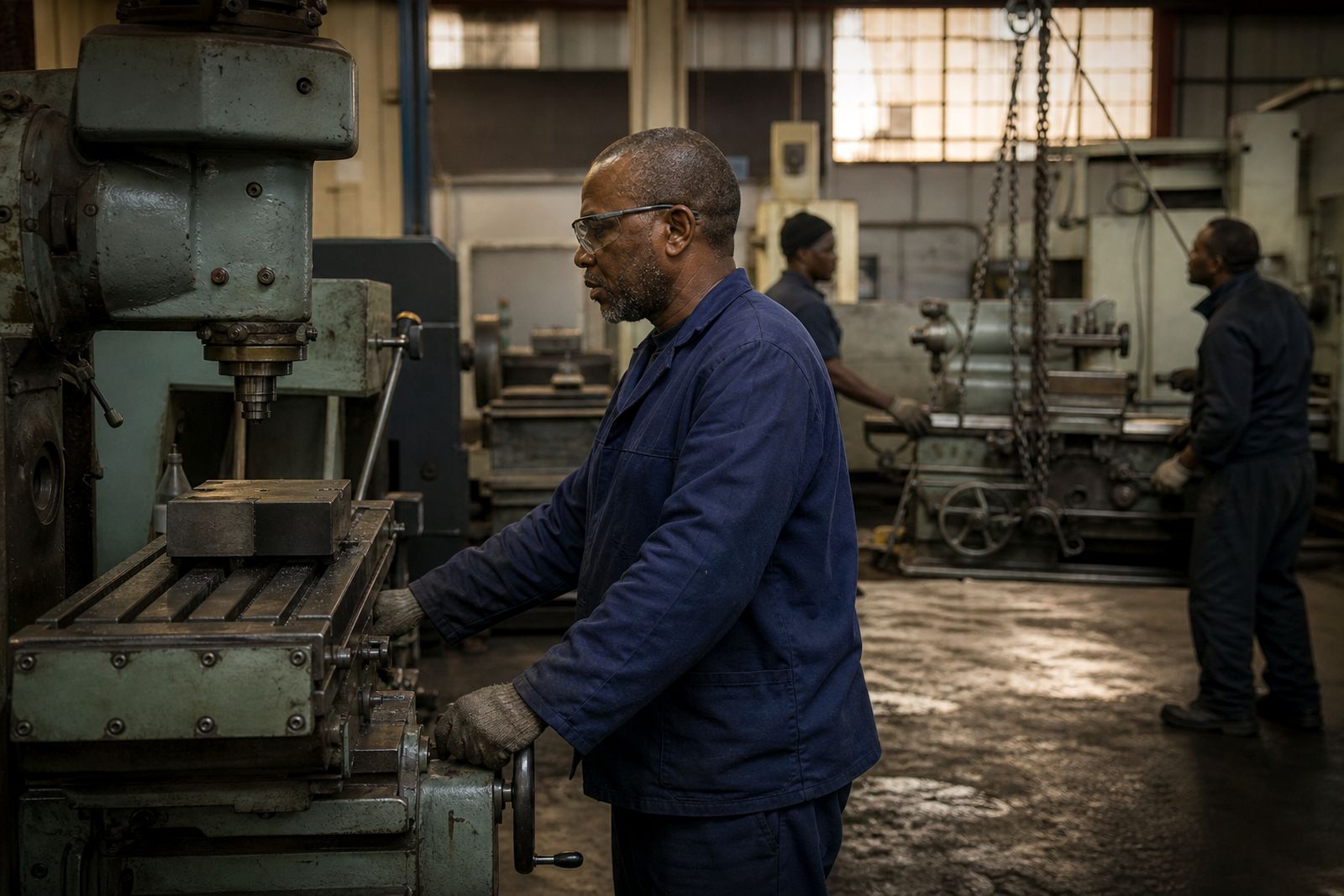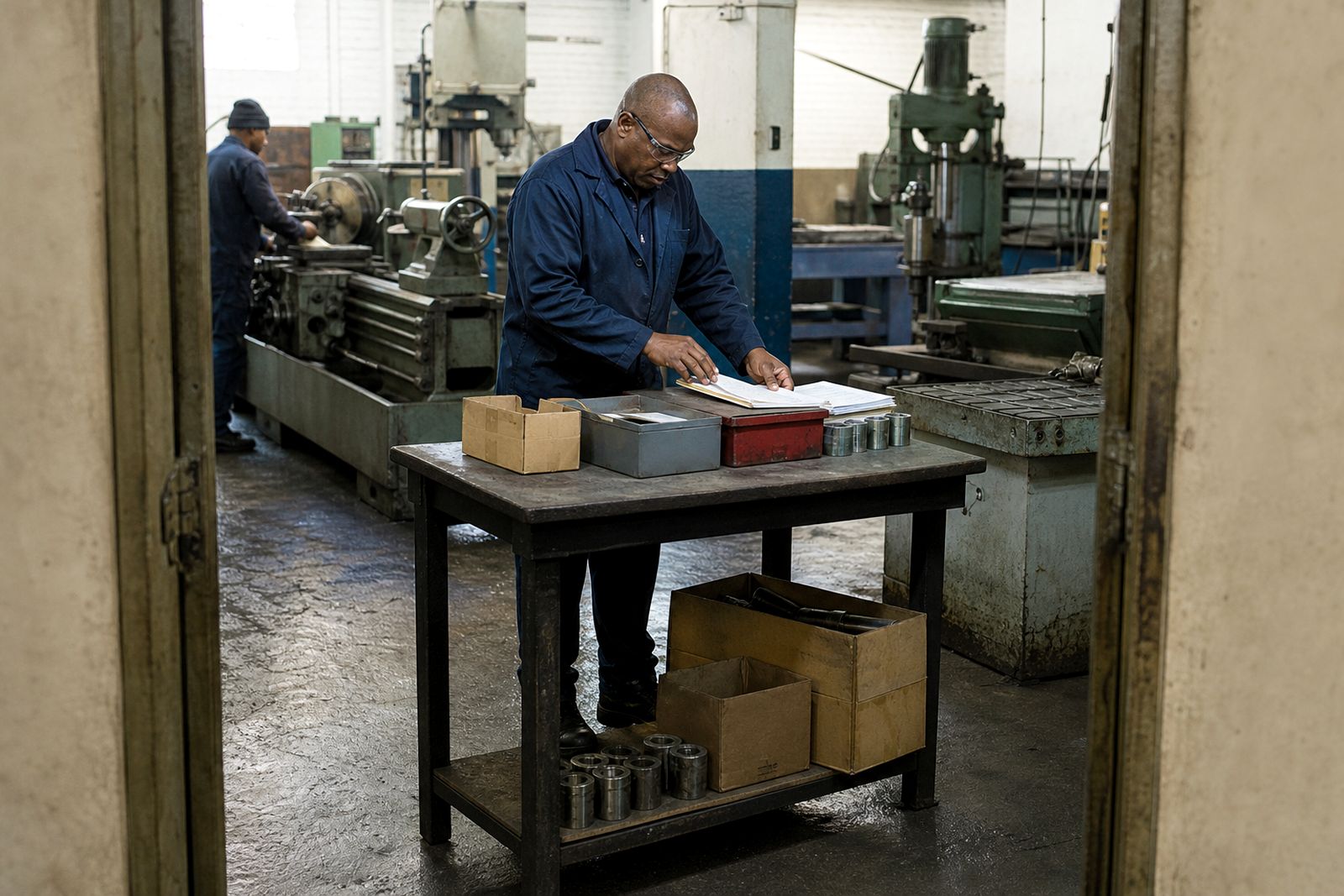

Operator card
An operator card is a written machine-side reference for the controls, start order, lubrication points and work limits on one machine. Your supervisor writes it for the machine as it stands on your floor.
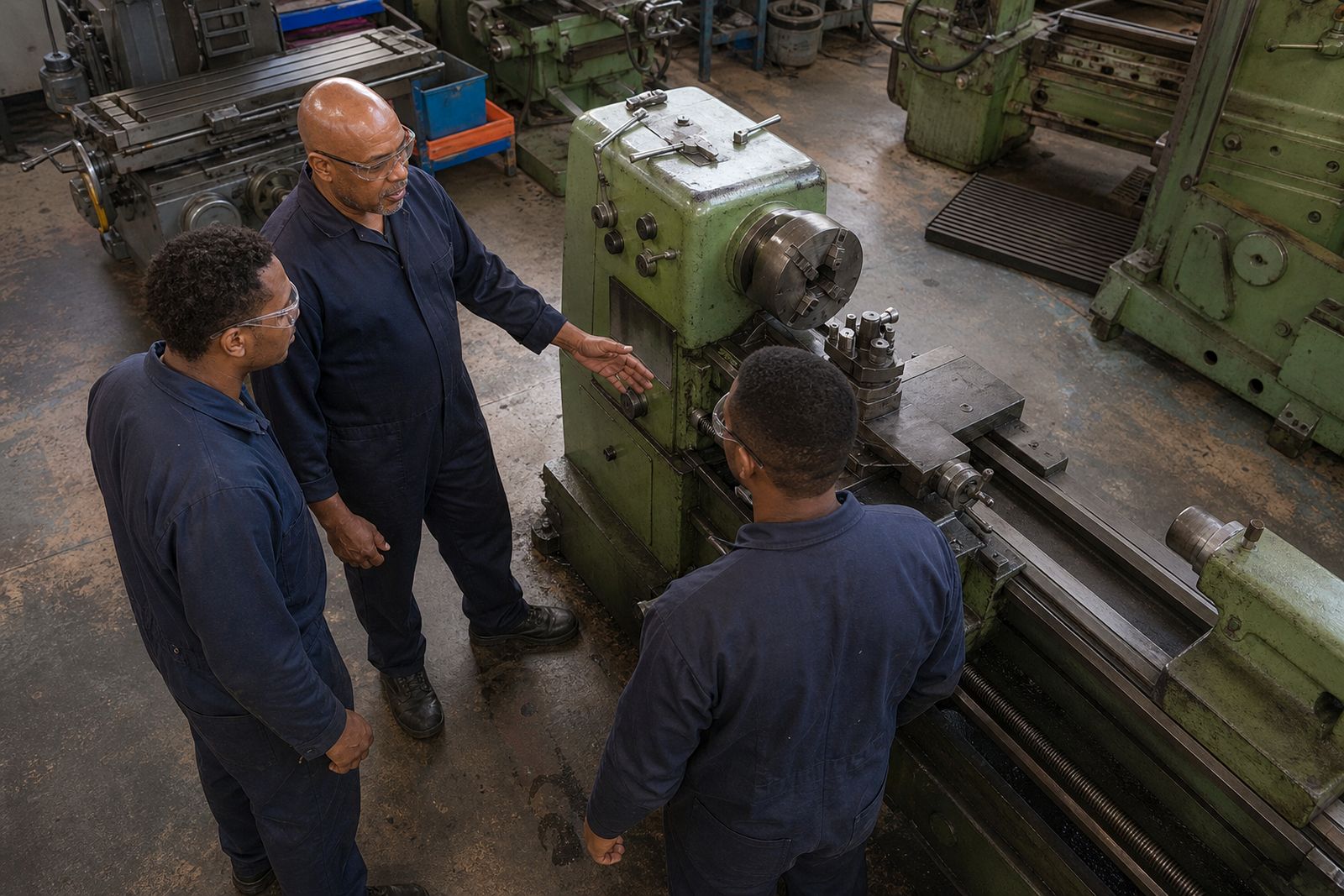
Identification for one machine
Identity details contain the machine name, serial or asset number, drive type and control labels used by your team. A correct identity line stops notes for one lathe, mill or boring mill being used on another machine.
Normal-use tooling belongs on the card when a chuck, vice, centre, steady or special spanner stays with that machine. Named loose items reduce disputes over what belongs at the machine during a shift change.
Controls before rotation
Start-order wording names the spindle control, feed engagement, brake action and emergency-stop reset in touch order.
Initial rotation notes record the safe standing position, the first stop action and the response expected from the spindle brake. Abnormal noise, vibration or coolant loss needs one written stop action.
Oil points and cleaning
Oil-point entries name each oil point, grease point, sight glass and fill mark in the wording used beside the machine. Wrong lubricant entries can damage slideways, gearboxes and screws because the operator follows the card during shift change.
Cleaning notes cover swarf, grinding dust and bare-metal corrosion checks where they affect the machine surface or controls. Slideway wiping, screw cleaning and chuck face cleaning need separate lines where those checks differ.
Work limits to record
Four entries make the card usable at the machine without copying the maker’s manual:
- Job mass limit approved by your workshop for that chuck or table.
- Permitted speed range for the named fixture.
- Feed direction and backlash warning for normal cuts.
- Stop action after noise, vibration or coolant loss.
Revision after machine changes
Revision space records your gearbox repair work, control-label changes, chuck replacement and fixture changes. A dated line identifies the supervisor who approved the latest wording and the operators named for the update.
Card storage belongs at the machine in a protected sleeve or clipped holder where operators read it before starting work. Manual pages remain separate because the card carries only the checks used at the machine.
What our machine customers say
Verified Google reviews