
Condition record
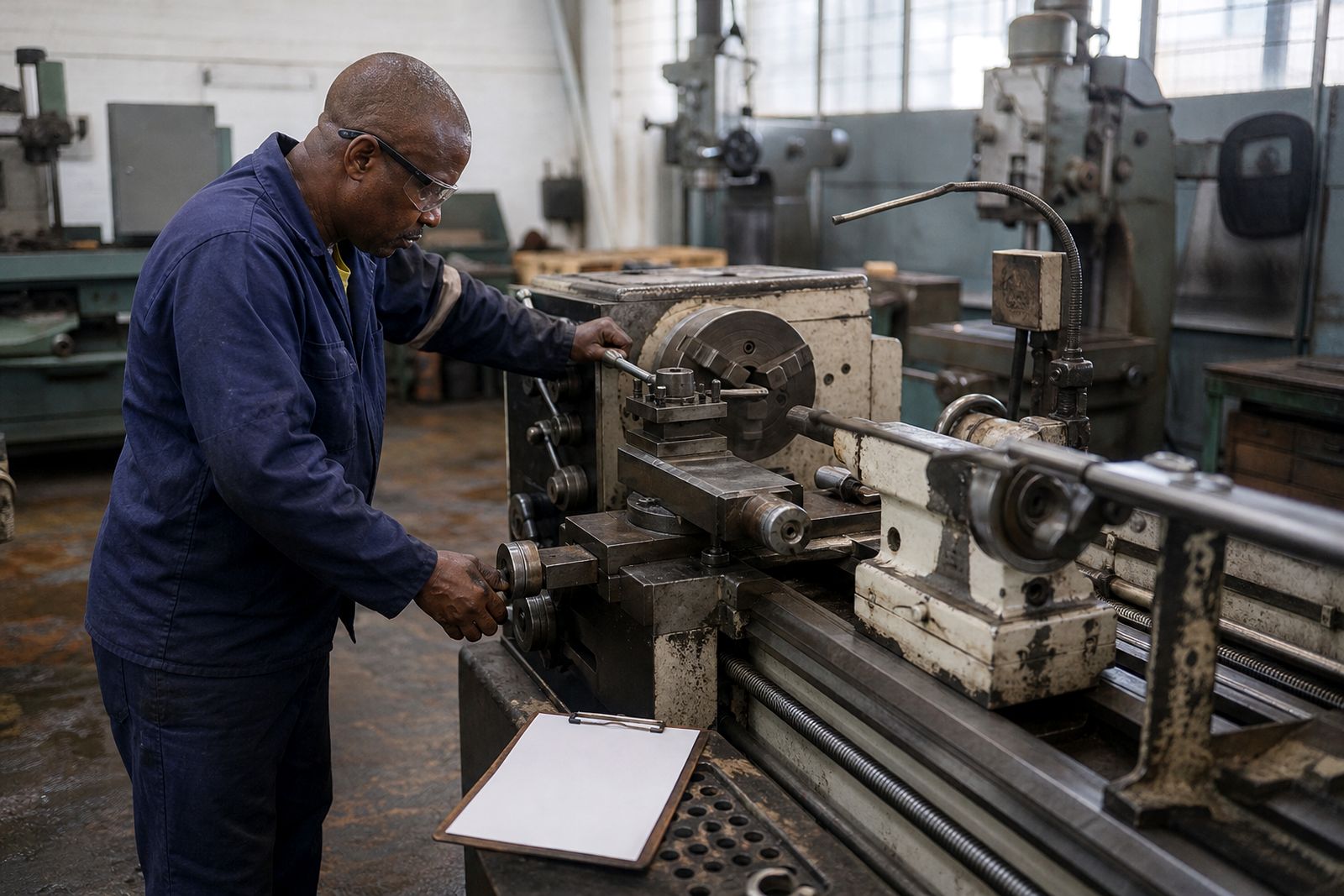
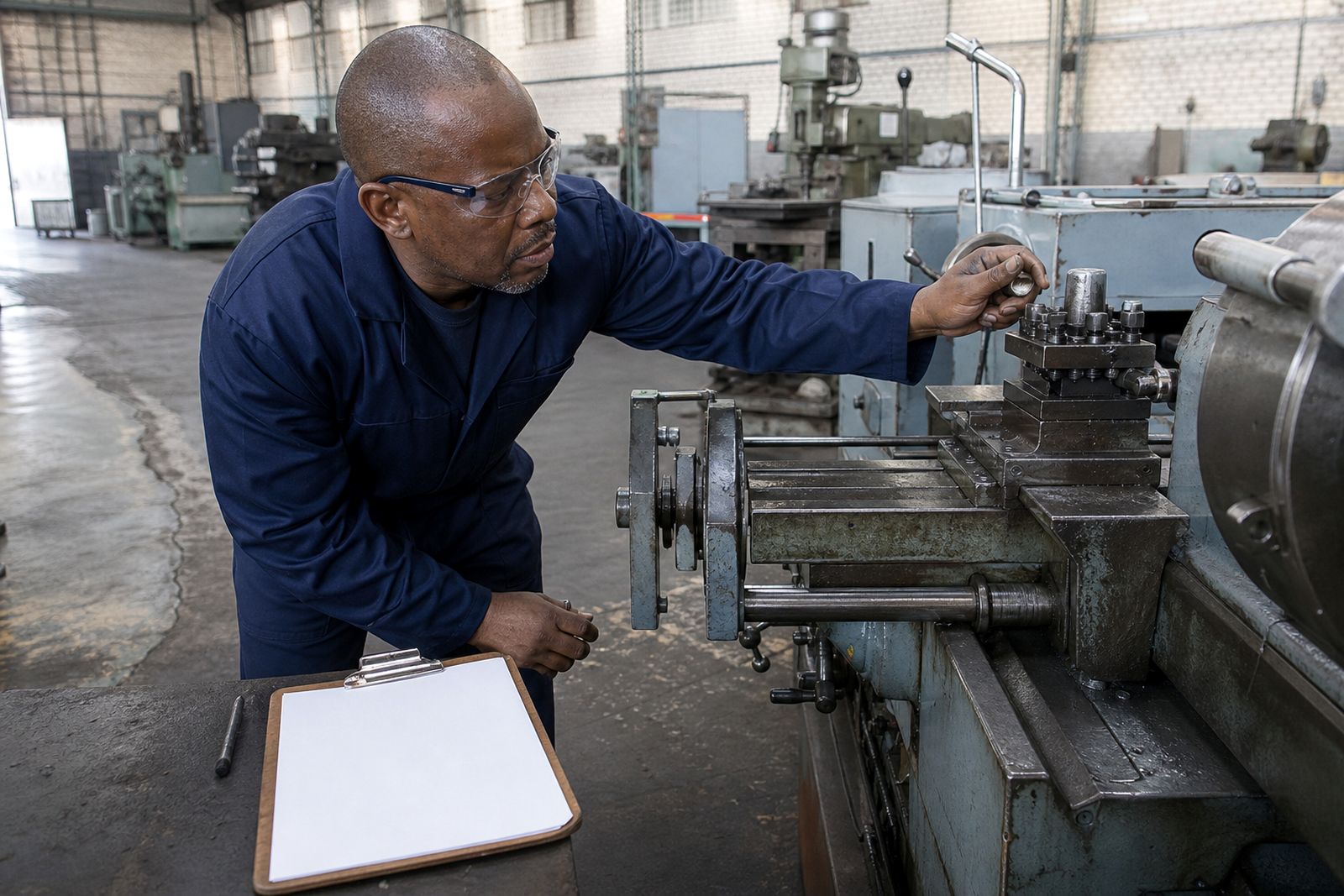
A condition record puts a used machine’s visible and testable condition into words before a quote, purchase decision or transport plan. Written entries should cover bed wear, spindle behaviour, slide travel, gearbox noises, electrics and included tooling.
Machine identity entries
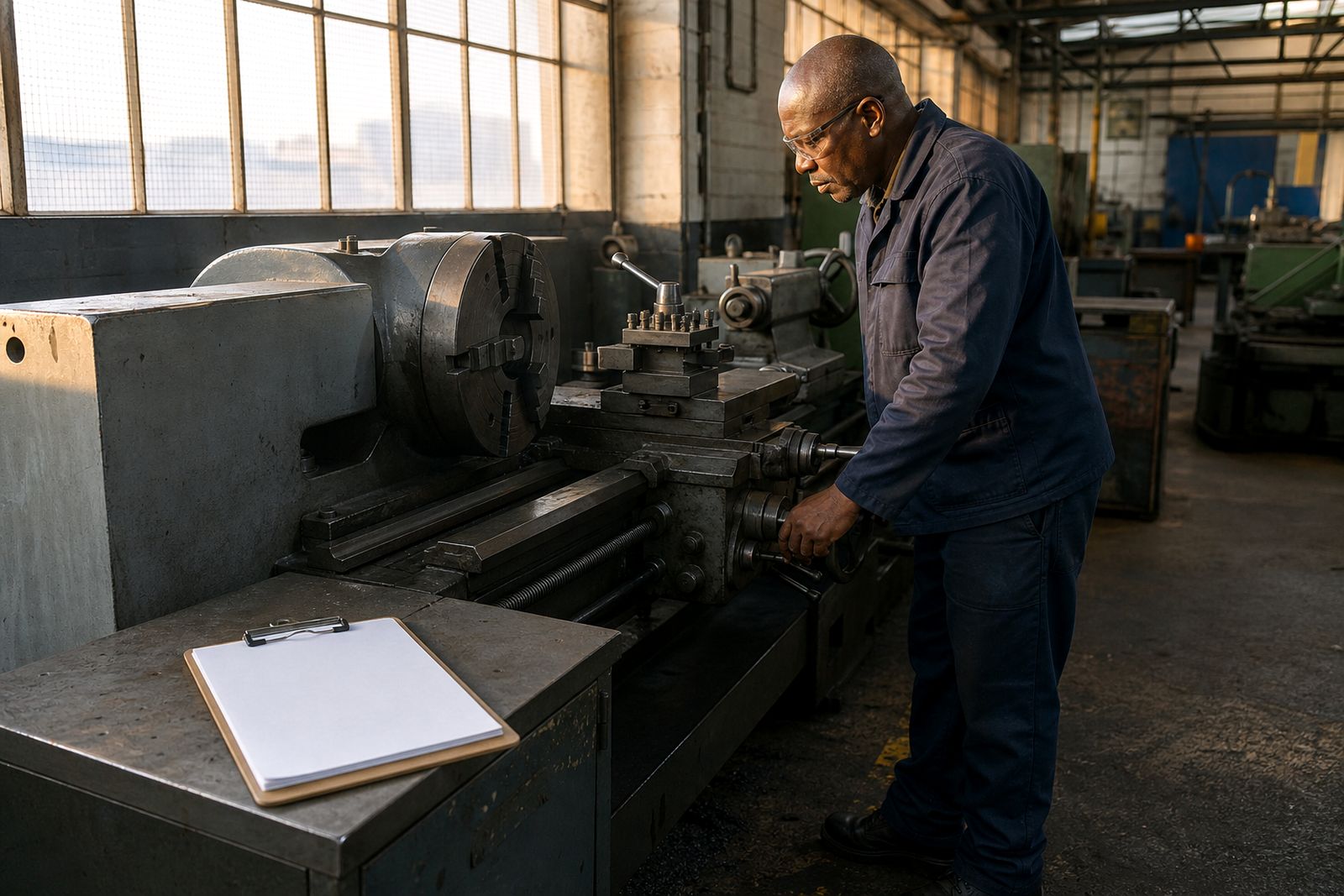
Identity entries need the machine type, maker’s plate wording, serial number wording and readable voltage or motor markings.
Match loose chucks, steadies, guards, pumps, arbors and manuals to the machine by written count and description.
Quoted condition notes work better when missing covers, cracked handles and altered controls are stated as faults, not left for later discussion.
Describe wearing surfaces
Bedways, columns, tables and grinder chucks need separate written entries because paint condition does not describe working accuracy.
Worst wear areas need a position and a description of scoring, pitting, dents, raised edges, taper wear or bare-metal corrosion.
Slide movement should be described through its full travel, including tight spots, backlash, missing locks and damaged handwheels.
Record rotating parts
Spindle notes need the available speed range wording, bearing noise under power and visible runout concerns at the nose or taper.
Gearbox entries should state whether each lever selects cleanly, whether oil is present and whether damaged selectors or covers are visible.
Feed shafts, lead screws, clutches and power feeds are recorded together because their faults affect thread cutting, boring and milling passes.
Write electrical condition
Electrical entries must separate nameplate supply from the supply available in your workshop.
Panel notes should cover labels, isolator condition, emergency-stop operation, loose conduit, damaged switches and cut cables in words.
Electrical entries contain four written checks:
- Nameplate supply and voltage wording.
- Control-panel labels and switch markings.
- Motor data and cable condition.
- Emergency-stop and isolator condition.
State tooling included
Tooling records need written counts and condition notes, not grouped wording that hides damaged or incomplete items.
Chucks, jaws, steadies, centres, clamps, arbors, grinding guards, valve tooling and spanners should be described separately.
Pack loose items under the same machine reference so a buyer can compare the quote against the dispatch list.
What our machine customers say
Verified Google reviews