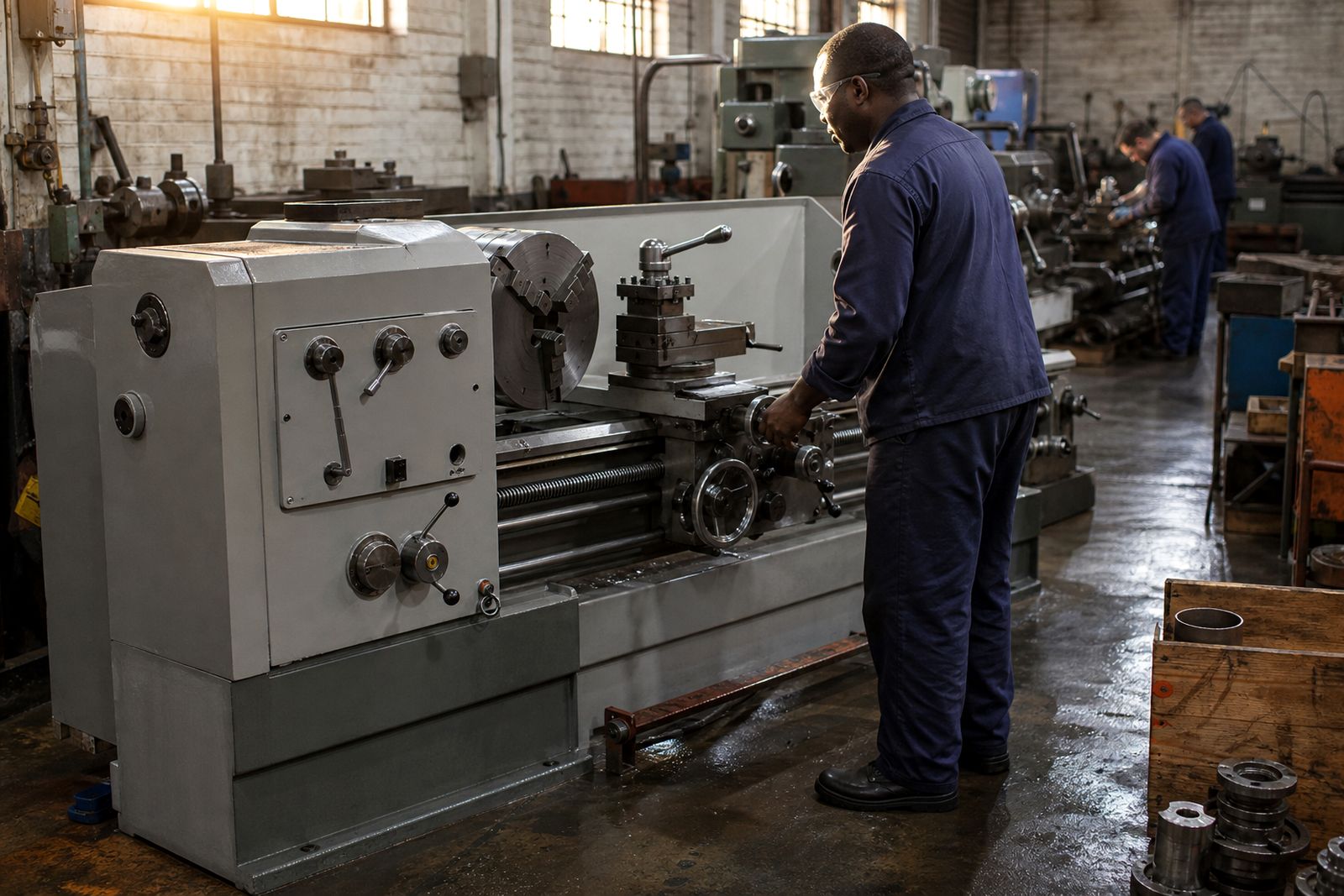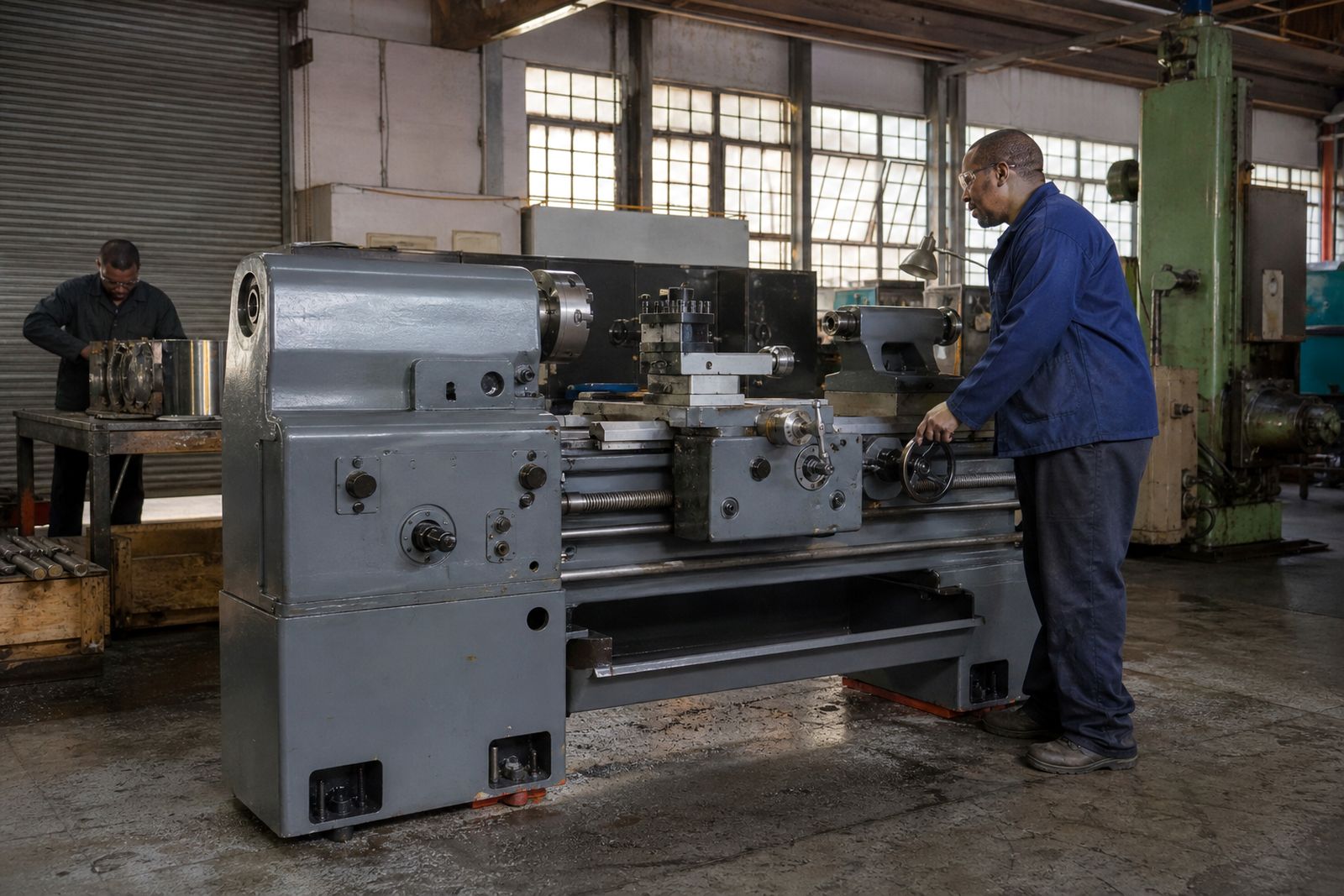

Bellville workshop lathe
A Bellville workshop lathe is selected around the longest shaft, largest chucking diameter and floor route to the chosen bay. Written dimensions keep the quote tied to the work instead of the building alone.
Job size comes first
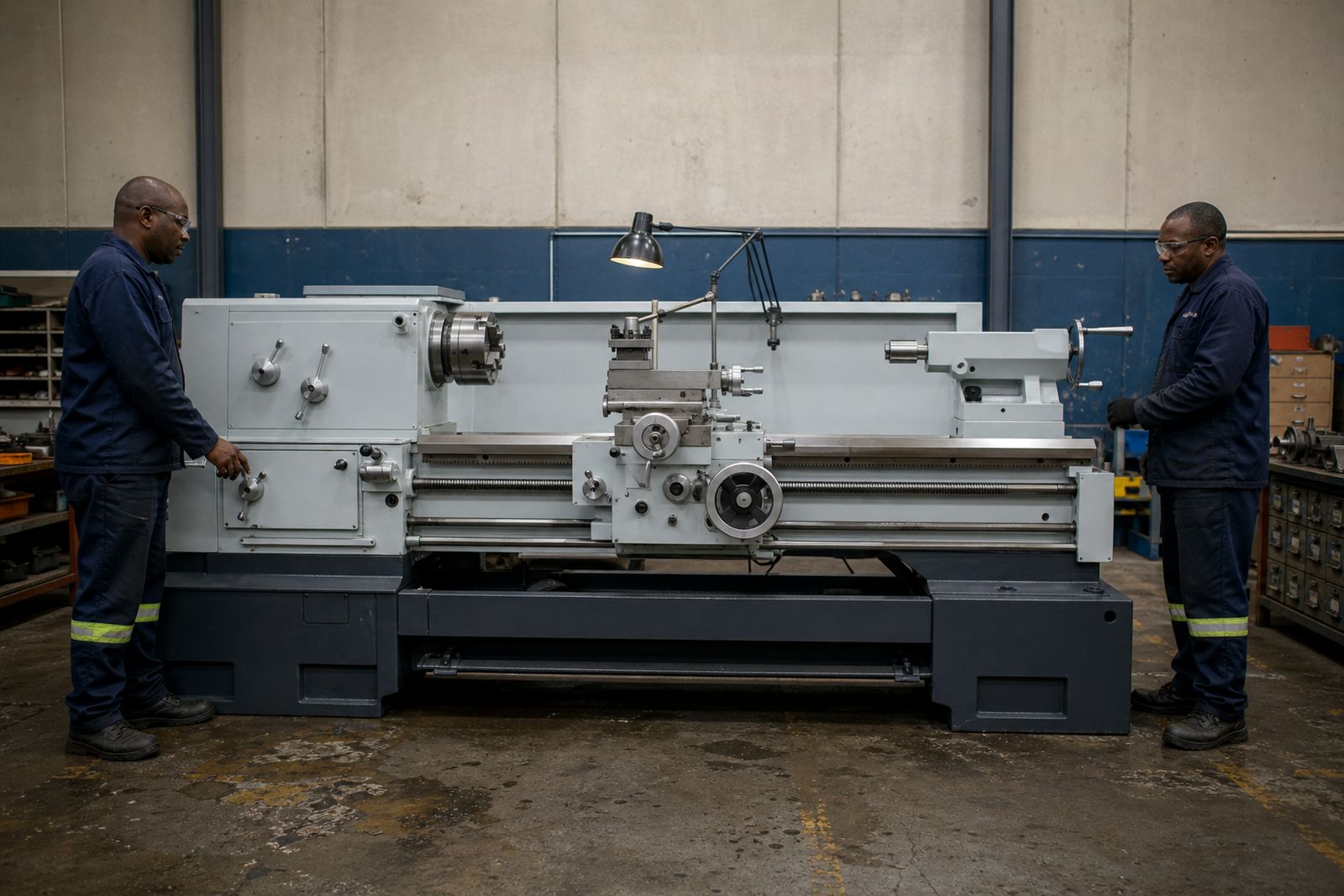
Turning capacity starts with the swing over bed, distance between centres and spindle bore for your work.
Worn shafts, sleeves and odd castings need clearance, while batch parts need repeatable tool and chuck changes.
Fine-setting work suits a toolroom lathe; heavier general turning suits an engine lathe as setup loads increase.
Bay position and access
Written floor measurements should show the machine footprint, operator side and tailstock end in the Bellville workshop.
Access openings, passage turns and roof-height limits affect the size delivered to the unloading point.
Allow working clearance behind the carriage for covers, swarf removal and chuck handling.
Supply and control checks
The supply phase, available breaker rating and machine voltage must match the lathe offered in the written quote.
A variable-speed machine, geared-head machine or older used lathe can place different demands on starting current.
Machine nameplate figures give the voltage and motor data needed to check the supply.
Lathe matching figures
Capacity matching needs these written figures for the Bellville workshop:
- Capacity requirements for swing over bed, distance between centres and spindle bore.
- Maximum job diameter, longest shaft length and heaviest workpiece weight you plan to turn.
- Access door width, passage width, turning clearance and floor surface on the machine route.
- Supply phase, voltage and available breaker rating at the chosen position.
Quote scope and spares
Machine availability changes, so the written quote identifies the exact lathe, included accessories and any quoted spare items.
Agreement on used-machine chucks, toolposts, steadies and coolant equipment sets the quoted job cost.
Parts enquiries need the make, model, serial number and a written description of the fault or worn component.
What our machine customers say
Verified Google reviews