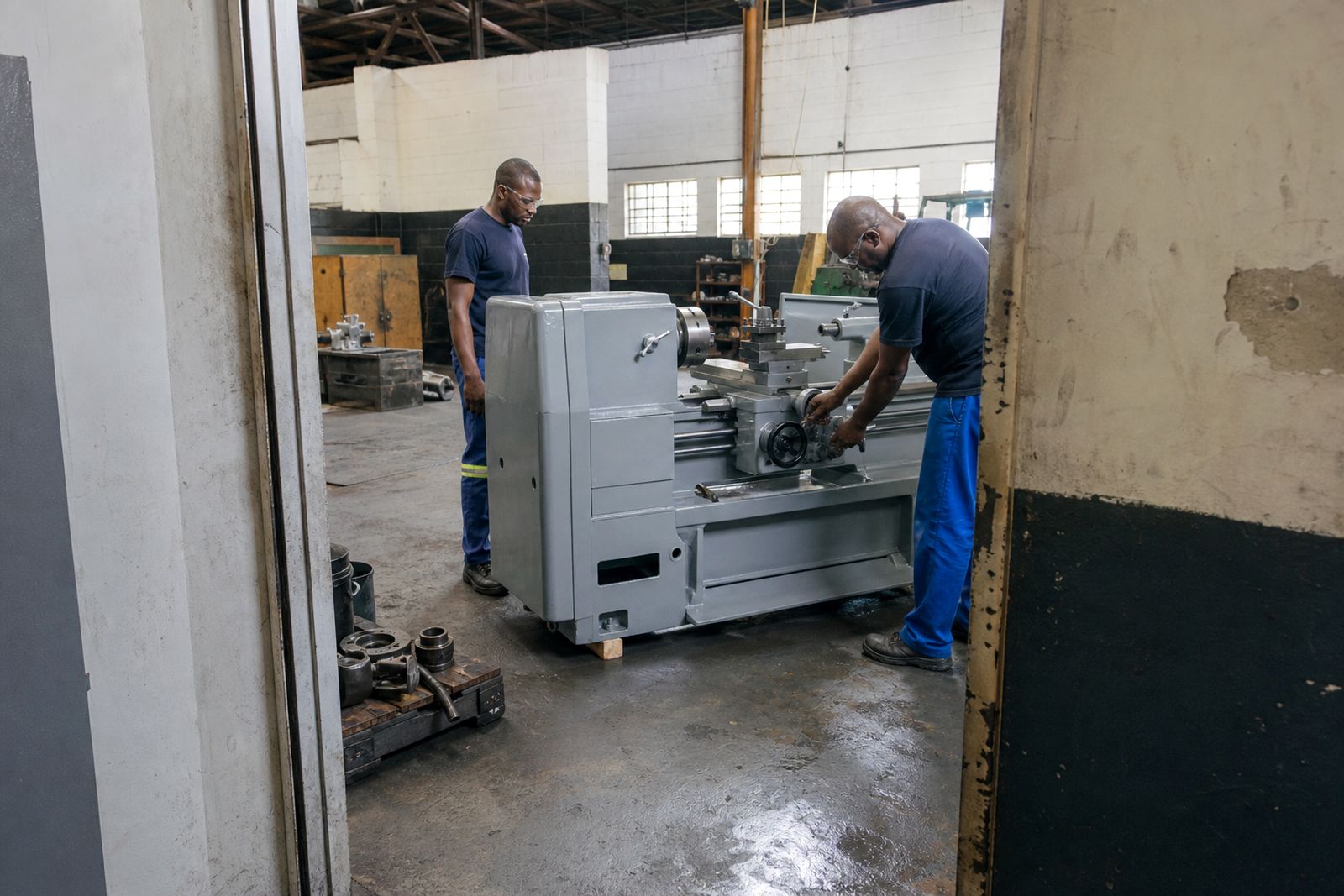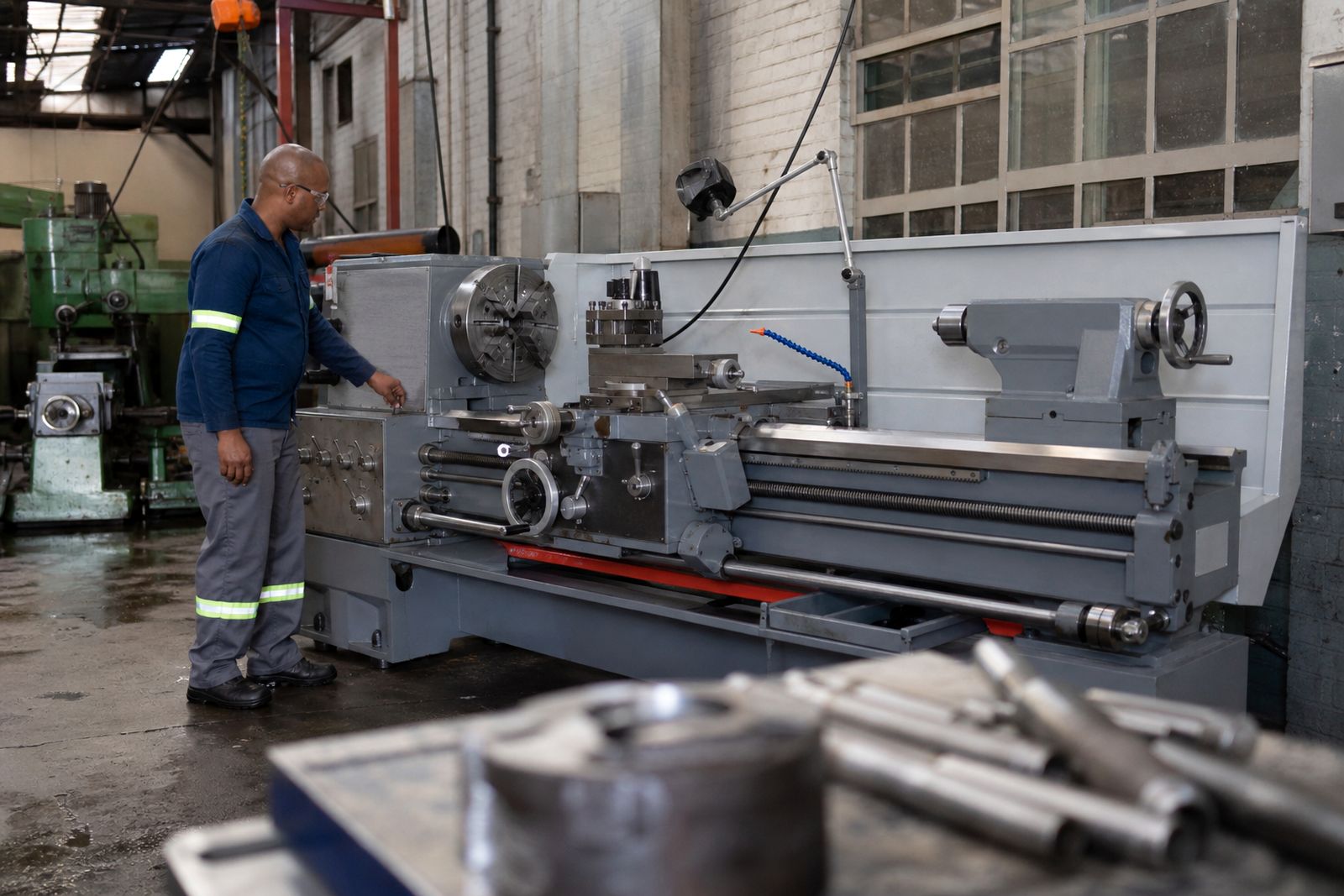

Polokwane rebuild workshop
Worn shafts, bushes, flanges and housings reach a Polokwane rebuild workshop below their drawing sizes, so repair limits matter as much as nominal dimensions. The rebuild machine group is sized around those parts before entry width and services are checked.
Part ranges set capacity
Rebuild work starts with the largest shaft, bush, flange, housing or valve part you need to machine.
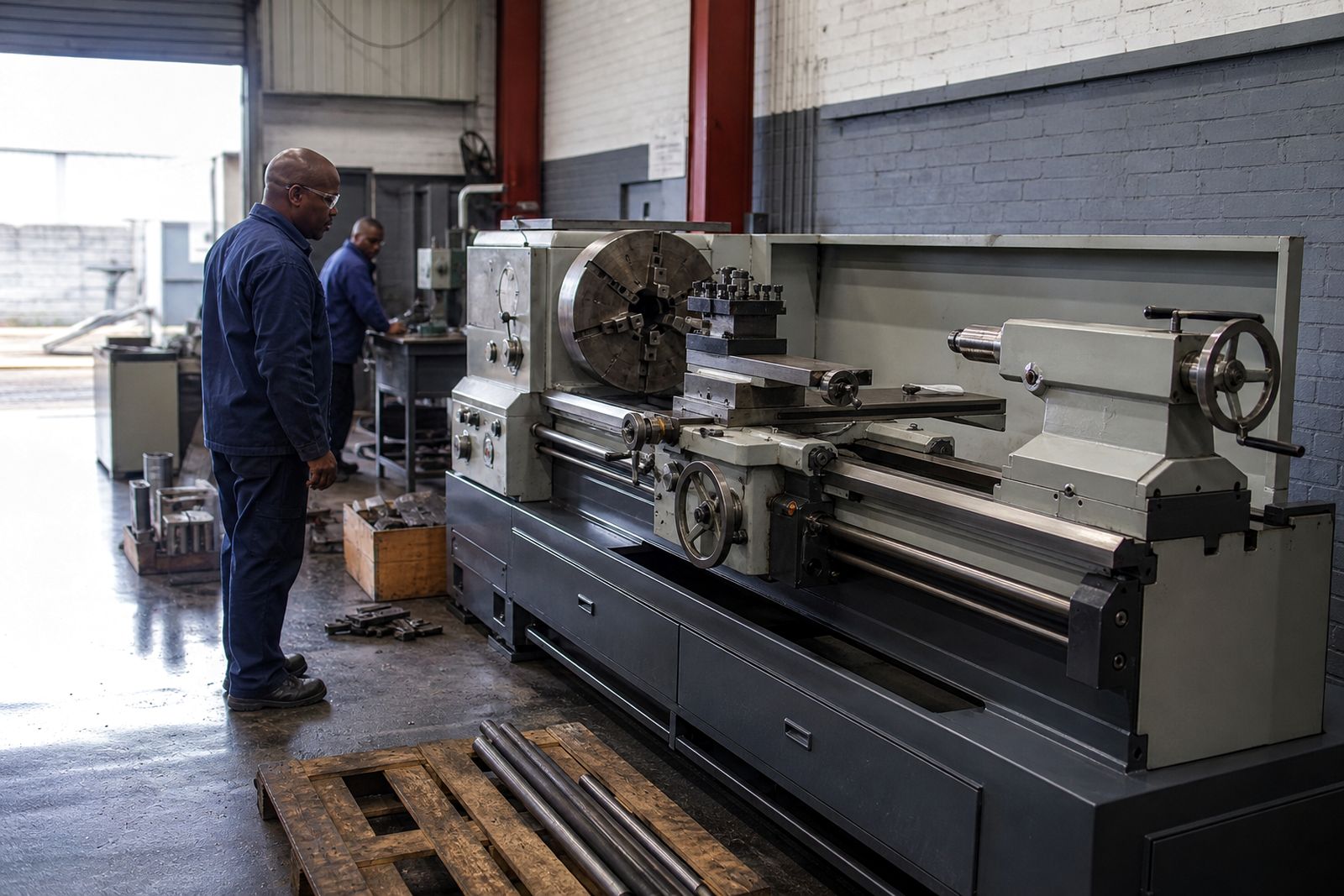
Give swing, between-centres length, bore, table travel and daylight figures in writing, because machine capacity must cover the part and workholding.
Small toolroom lathes suit finishing and sleeve work, while heavier engine lathes carry larger repair work with steadies and faceplates.
Placement space and entry
Workshop layout must allow for the machine footprint, operator space, chuck removal space and coolant or swarf handling.
Entry measurements must cover the tightest doorway, roller door, passage and turn into the final machine position.
Services for machine selection
Machine selection depends on available phase, voltage, breaker capacity and motor load at the Polokwane workshop.
Electrical capacity matters because a lathe, grinder, drill or press cannot be judged by floor size alone.
Workshop service figures for the machine enquiry are:
- Electrical phase and supply voltage at the intended position.
- Breaker capacity allocated to the selected machine.
- Pneumatic supply requirement for any machine function that uses air equipment.
- Coolant, lubrication and swarf handling space beside the machine.
Rebuild machine group
Engine lathes cover shaft work, thread repair and bush machining where diameter and length set the choice.
Housings and heavy castings suit boring mills where the bore centreline must stay square to the mounting face.
Radial drills, surface grinders, milling machines, hydraulic presses and valve grinders fill separate repair work steps, so one quotation can cover several operations.
What our machine customers say
Verified Google reviews