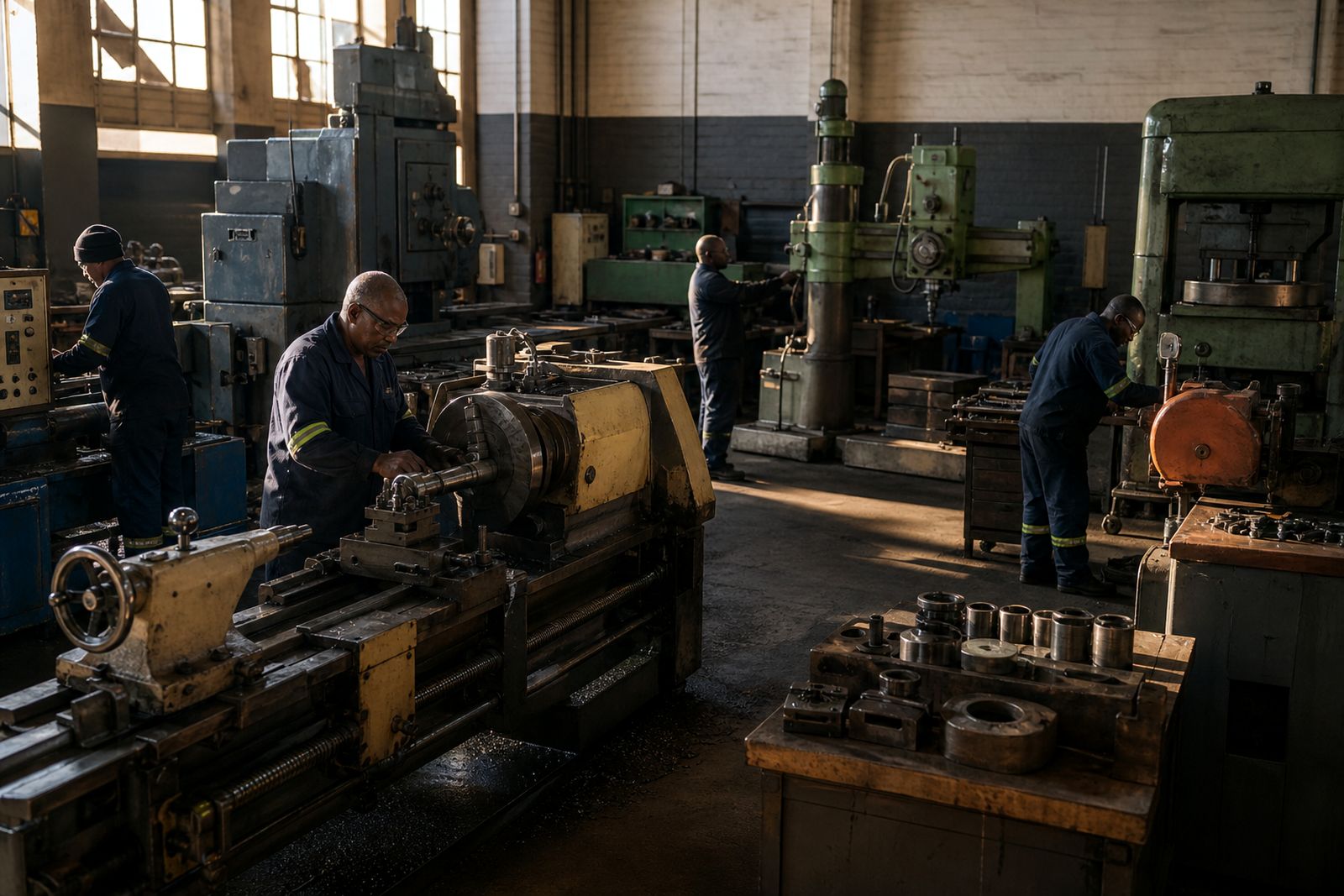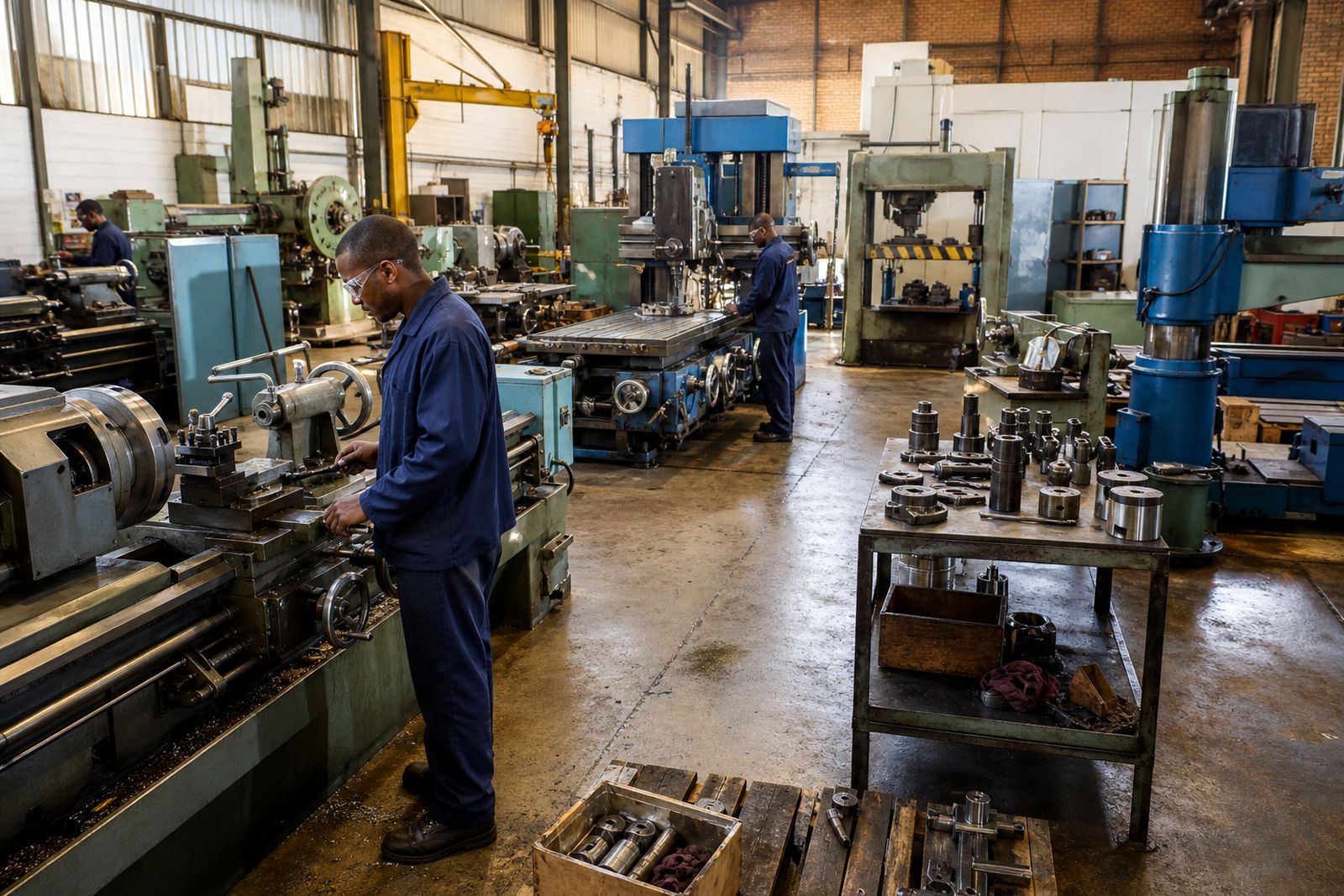

Safe running
Safe running on a hydraulic press depends on guarded movement, controlled pressure and a fixed start and stop order in your own workshop. Written checks beside the machine reduce guessing between operators.
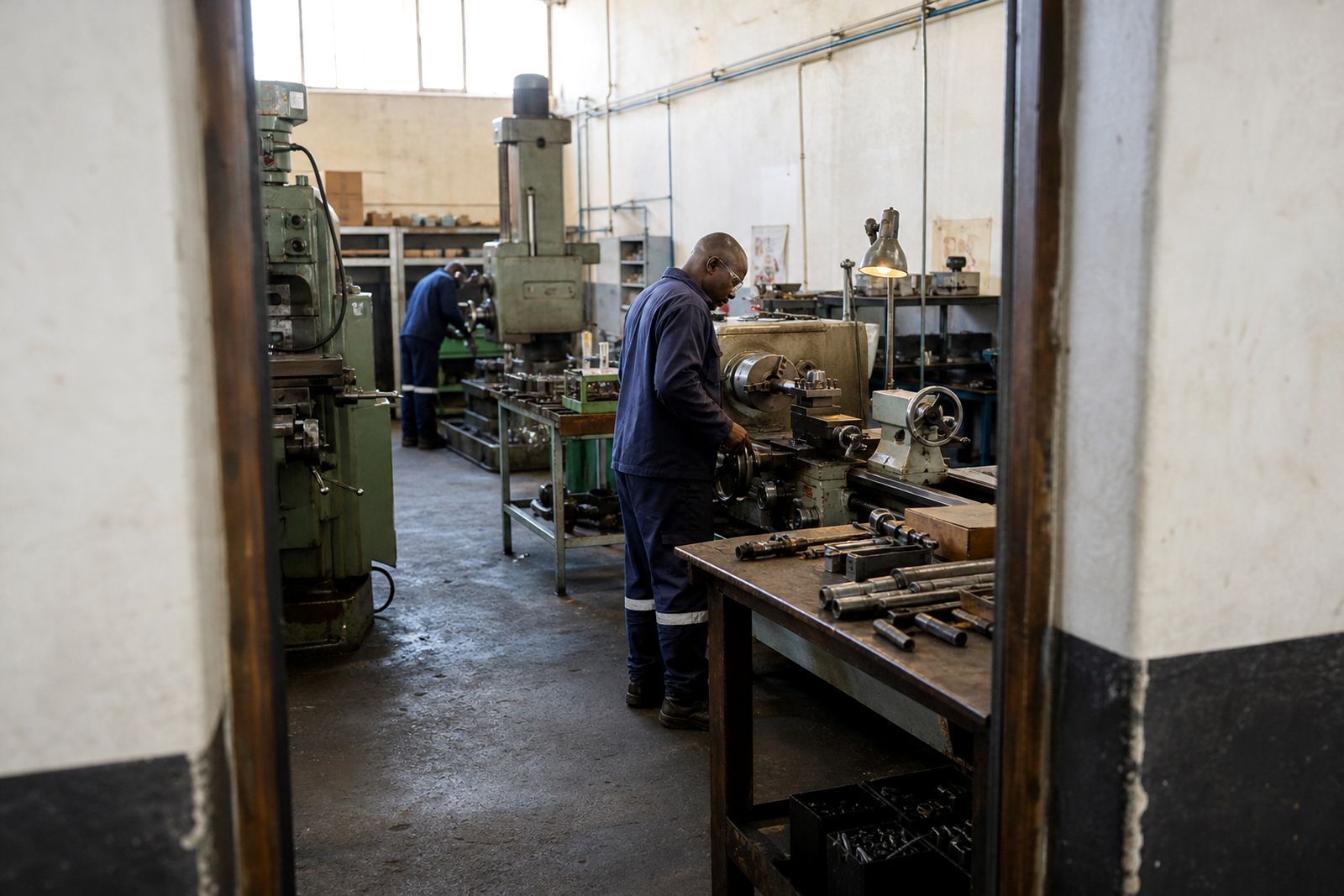
Guard position and movement
Guard position must match the press movement area before the pump is started. A bent guard, loose bracket or missing stop pin needs repair before the press is used.
Hands, loose tools and offcuts must stay clear of the bed while the ram moves. A clear bed also lets the operator see skew loading before pressure is applied.
Side access needs the same control as the front opening. Marking the danger area on the floor gives every operator a visible limit around the moving ram.
Lubrication points and pressure
Pins, slides and guide faces need the lubrication points recorded for that press. Dry movement increases wear and can change the feel of the ram under load.
Oil grade, fill level and grease points should be written into your maintenance note.
Gauge response, pump sound and ram return belong in the running record. A slow return stroke or creeping ram needs to be stopped and logged before the next job.
Operating start and stop
A fixed start and stop order runs in four steps:
- Guard position is checked and loose tools are removed from the bed.
- Lubrication points are confirmed against the note for that press.
- Pump start follows only after the bed area is clear.
- Ram return, pressure release and isolation finish the job.
Notes for operator handover
Shift notes should name the job, the tooling used and the pressure setting recorded by your workshop. Written figures stop the next operator from relying on memory.
Unusual noise, uneven movement or a change in gauge response should be written down with the job number. Your operators can then use the same fault wording.