
Delivery planning
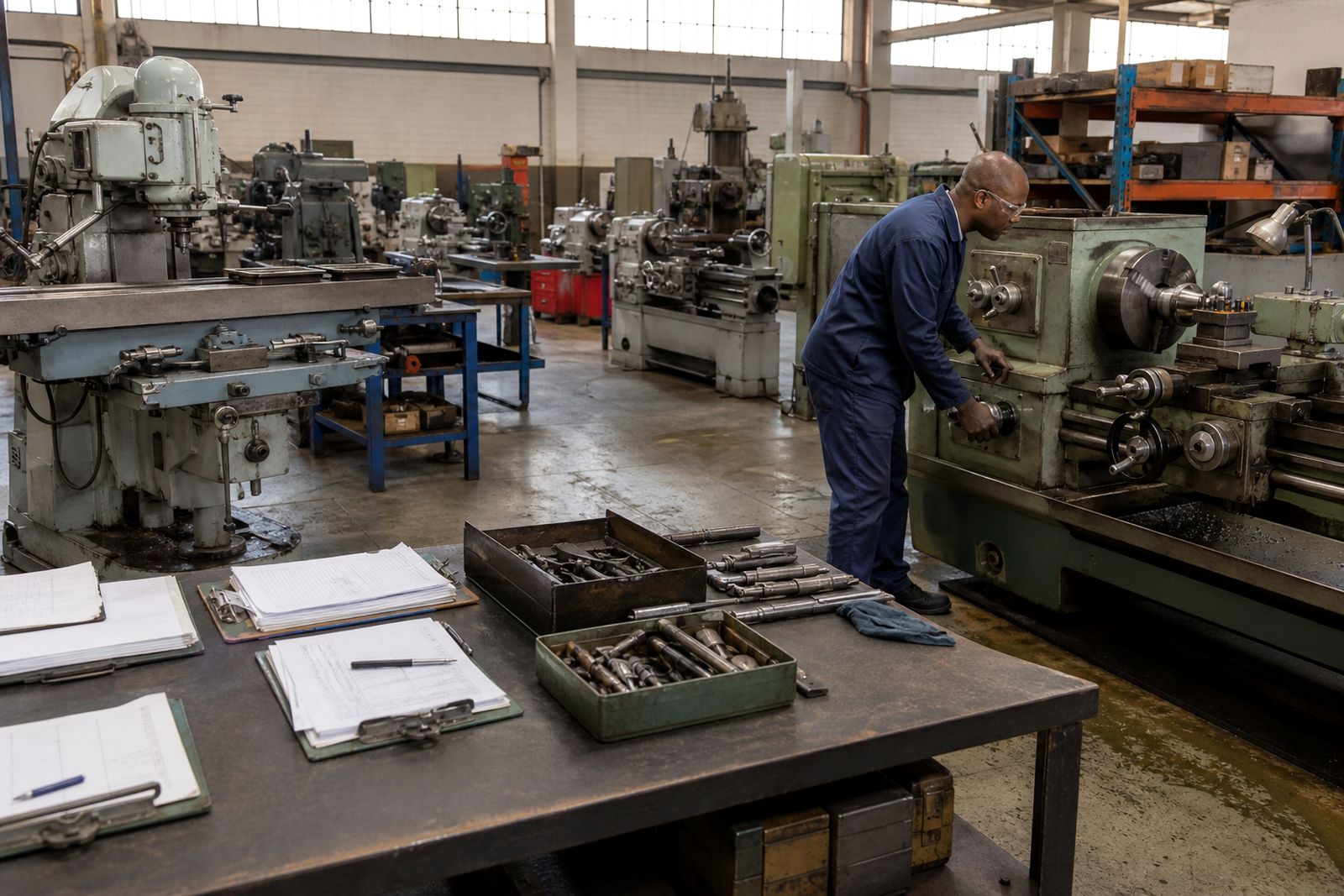
Receiving work starts at the workshop, where access, floor capacity and offloading arrangements decide whether the load can reach its stand. Dispatch is arranged by head office; your contractors handle rigging and connection.
Receiving access checks
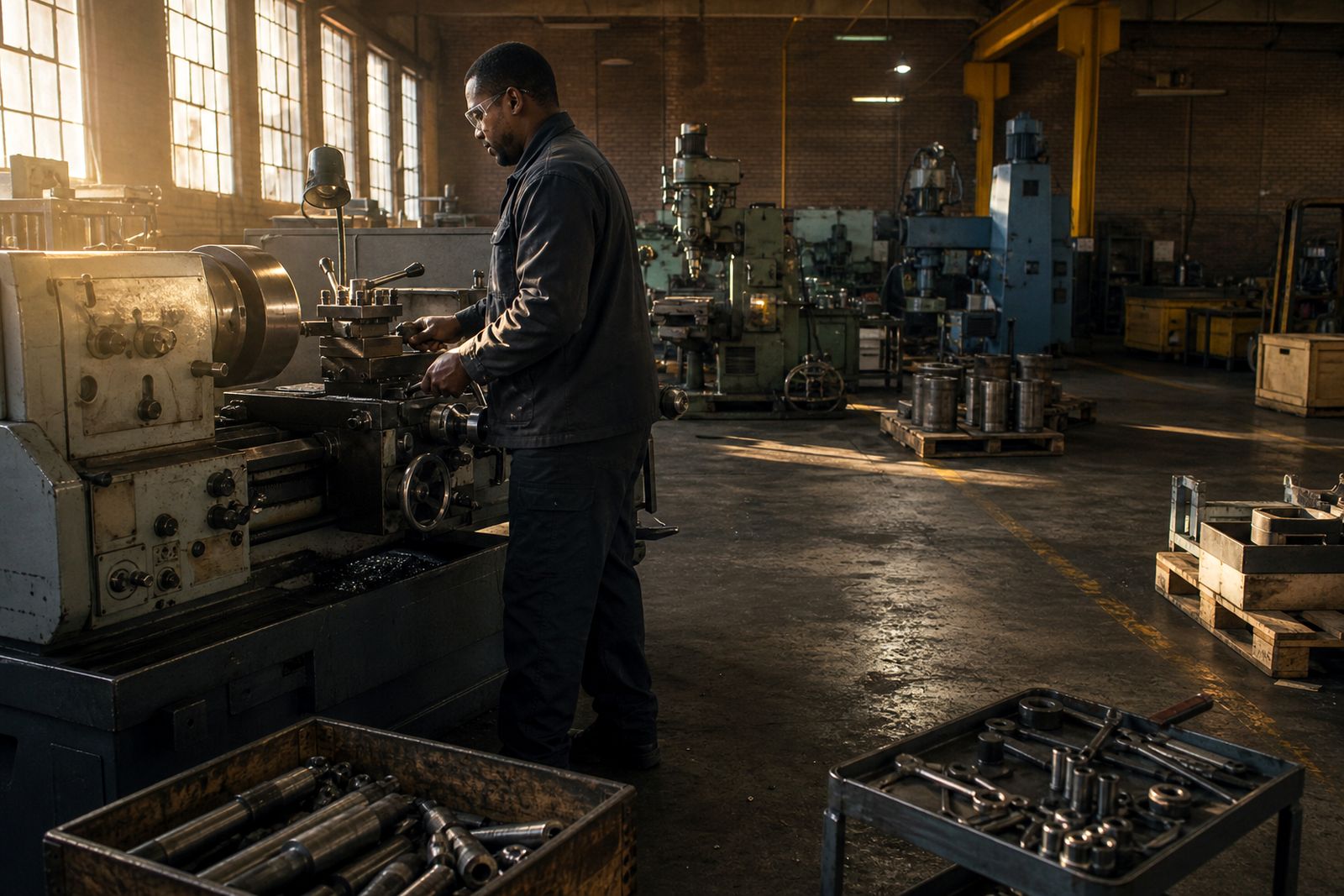
The truck needs a safe stopping area close enough for the lifting equipment agreed by your rigger.
Measure gate openings, doorway heights, turning space and the route from the entry point to the final stand.
Loose material, parked vehicles and temporary work benches can reduce the route after a dispatch date is agreed.
Route notes in writing make a clearer dispatch instruction than a general address line.
Stand position and load path
Weight, base size and contact points belong in your written floor check before dispatch is arranged.
Concrete condition, trenches, covers and raised plinths affect how the rigger moves the load inside the workshop.
Chosen position affects operator access, chip removal, coolant handling and clearance around guards and covers.
Paint or tape can mark the intended stand so the rigger sets the machine in the agreed position.
Offloading on delivery
The appointed rigger needs the delivery address, machine description and final stand position before the truck is sent.
One person at the receiving workshop must be authorised to accept the delivery and sign the paperwork.
Dispatch notes should state whether the machine is unloaded outside, at a roller door or inside a marked bay.
Written receiving details
A truck booking needs four written receiving details:
- Full delivery address and the authorised receiving person.
- Machine description from the quote and any packing or base information shown there.
- Appointed offloading contractor and lifting method at the receiving end.
- Final stand position and checked route from entry point to stand.
What our machine customers say
Verified Google reviews