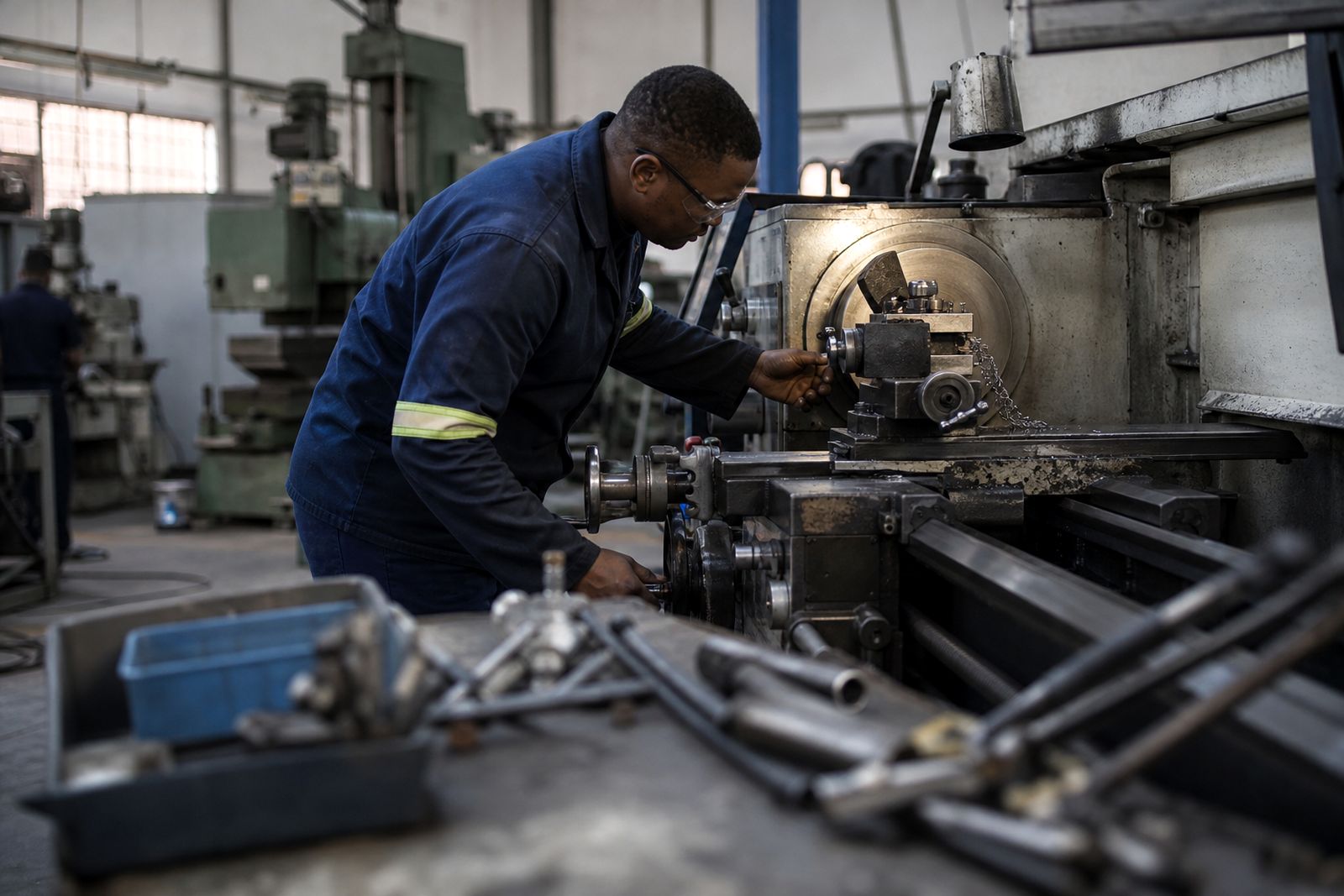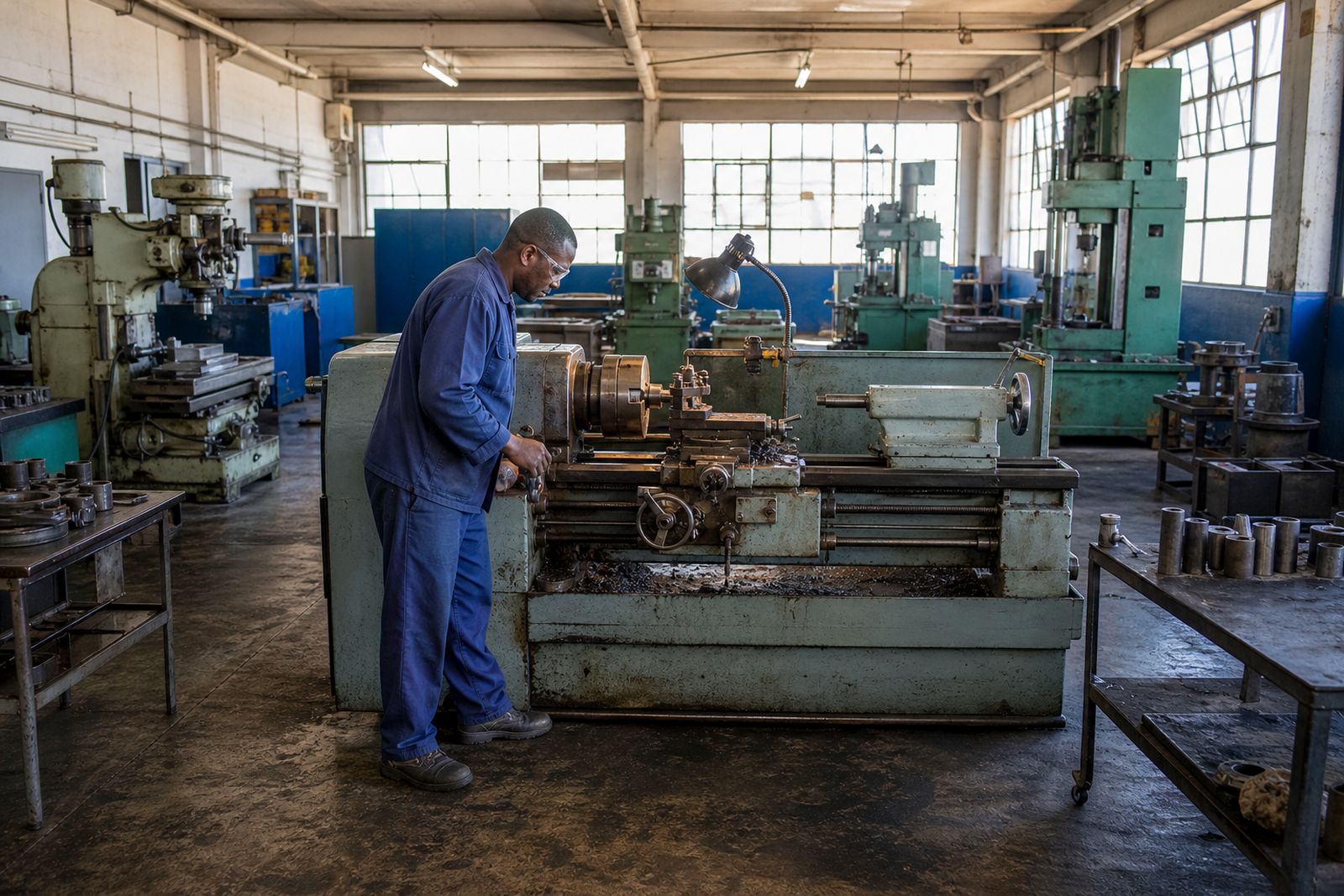
Export line
Export supply from South Africa only runs smoothly when the machine description, dispatch paperwork and export routing all match. Written machine details reduce errors between the quote, packing record and receiving workshop file.
Identity checks for export
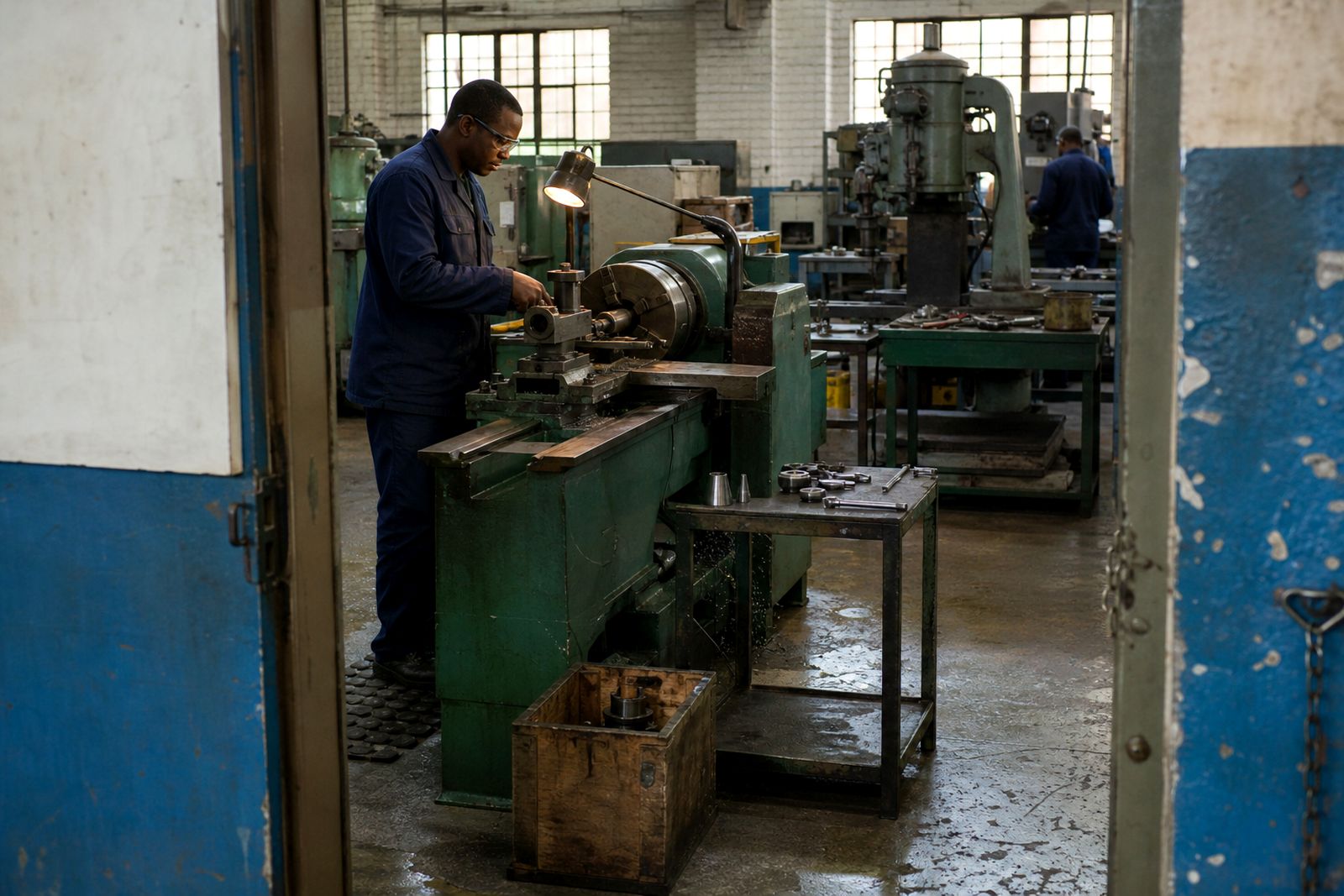
Accurate export records start with the machine class, make, serial markings and control type written in one place.
Quoted capacity terms must match on the quote, packing note and buyer file.
Motor voltage, phase, hertz and control voltage affect the receiving workshop's electrical planning.
Loose equipment needs its own written line, because chucks, steadies and guards can be separated during packing.
Export document matching
Document wording should name the machine type rather than a broad workshop category.
Serial markings, nameplate wording and quoted accessories must agree before dispatch documents are finalised.
An export quote needs these written facts from you:
- Machine class, make and visible serial wording.
- Destination country and delivery handover point.
- Electrical data from the motor and control plates.
- Supplied loose tooling, guards and spares travelling with the machine.
Packing data for freight
Crate sizing uses machine length, width, height and any parts removed for transport.
Weight information affects freight planning, crane selection and export costing.
Drain points, oil level notes and coolant tank status reduce confusion during freight handling.
Bare slides, tables and chucks need written corrosion-protection requirements where freight handling exposes unpainted metal.
Dispatch scope after sale
Quote wording can record the machine, supplied accessories and dispatch basis for the selected freight arrangement.
Customs entries and destination-country paperwork belong with your freight agent or clearing agent.
What our machine customers say
Verified Google reviews