

First-run checks
First-run checks cover power direction, lubrication, levelling and feeds once a machine has been placed and connected. They are carried out on your own floor by the people who will run it.
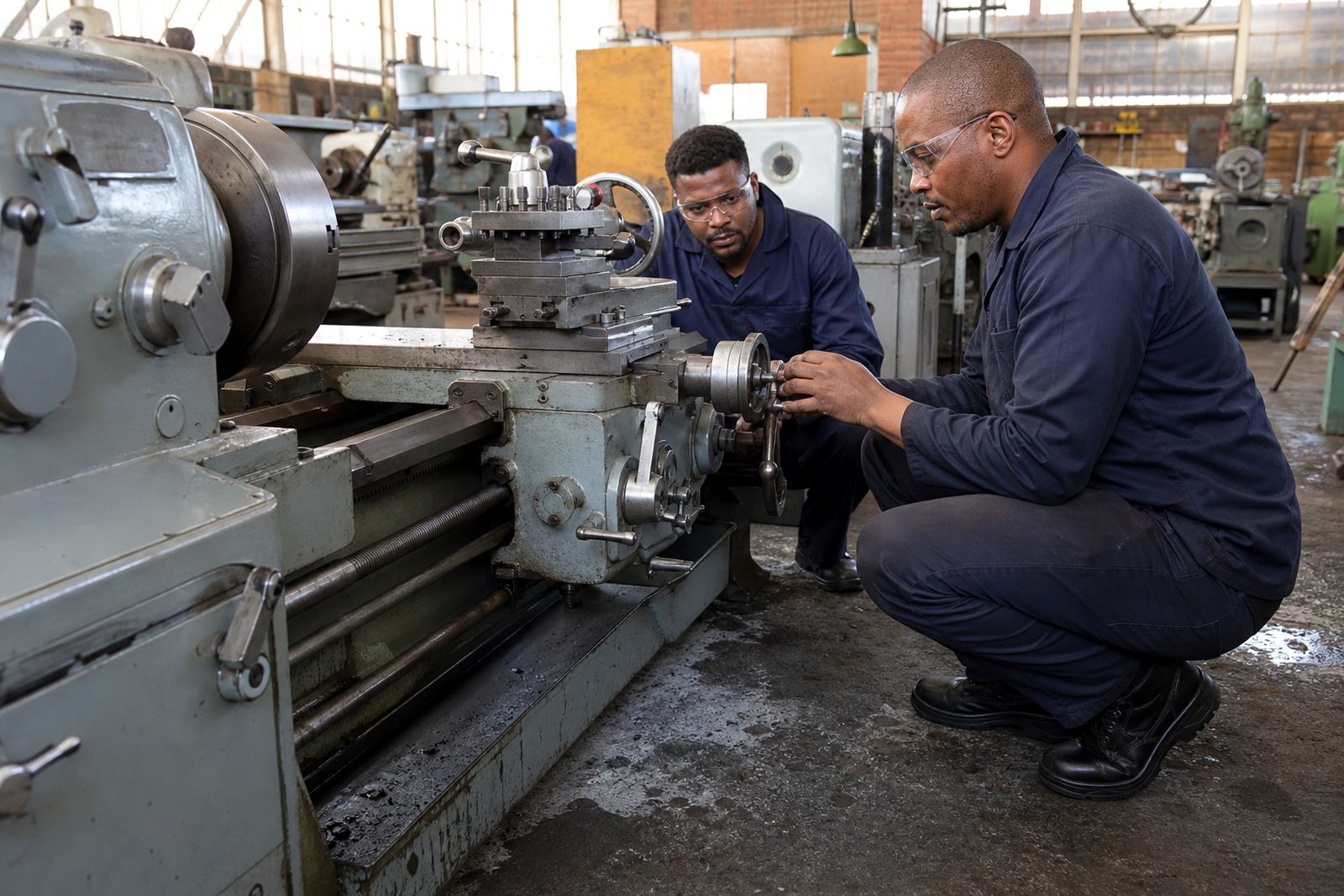
Power and rotation checks
The electrician’s first check is supply voltage, phase order and earth continuity against the machine plate and electrical cabinet markings.
Wrong spindle rotation can damage pumps, threaded work and feed gear before a tool touches the job.
Bump the motor without load, then mark the confirmed rotation direction on the first-run record.
Coolant and hydraulic pumps need separate rotation checks where the machine has separate motors or contactors.
Levels and lubrication
Final levelling readings belong in writing because twist in a bed changes turning size, facing marks and slideway contact.
A surface grinder or milling machine needs the table checked through its travel, not only at the centre position.
Oil level, oil grade and lubrication flow are first-run checks before spindle speed, feed selection or table movement.
Dry ways, empty sight glasses or blocked metering points stop the run until the workshop corrects the cause.
Feeds under no load
Feed selectors, rapid traverse and direction levers are tested at low speed with no cutting load.
Unexpected travel direction can move a saddle, ram or table into a stop before the operator reaches the control.
Threading gear on a lathe needs a slow engagement check with the half-nut, lead screw and feed shaft separated where the design allows.
Written first-run record
Machine files stay clearer when first-run readings are written before production work starts.
Production or repair work on customer jobs should wait until the first-run notes show that motion, lubrication and feeds have been checked.
A first-run record is useful when it contains these written checks:
- Level readings at each levelling point after the bed or table has settled.
- The oil grade, fill level and visible flow at each lubrication point.
- The spindle or main motor rotation direction before feeds or pumps are engaged.
- The feed engagement result at low speed with no cutting load.
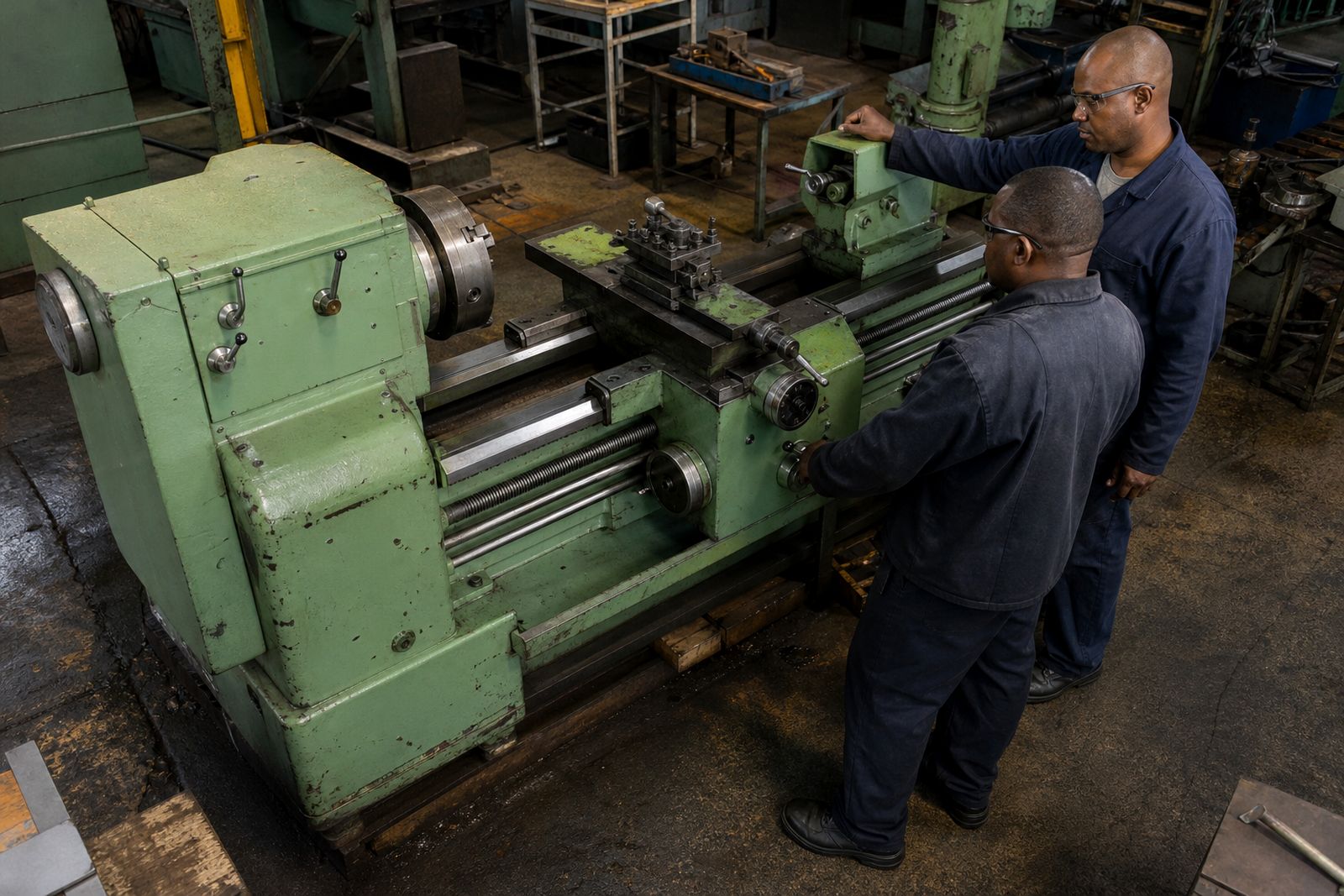
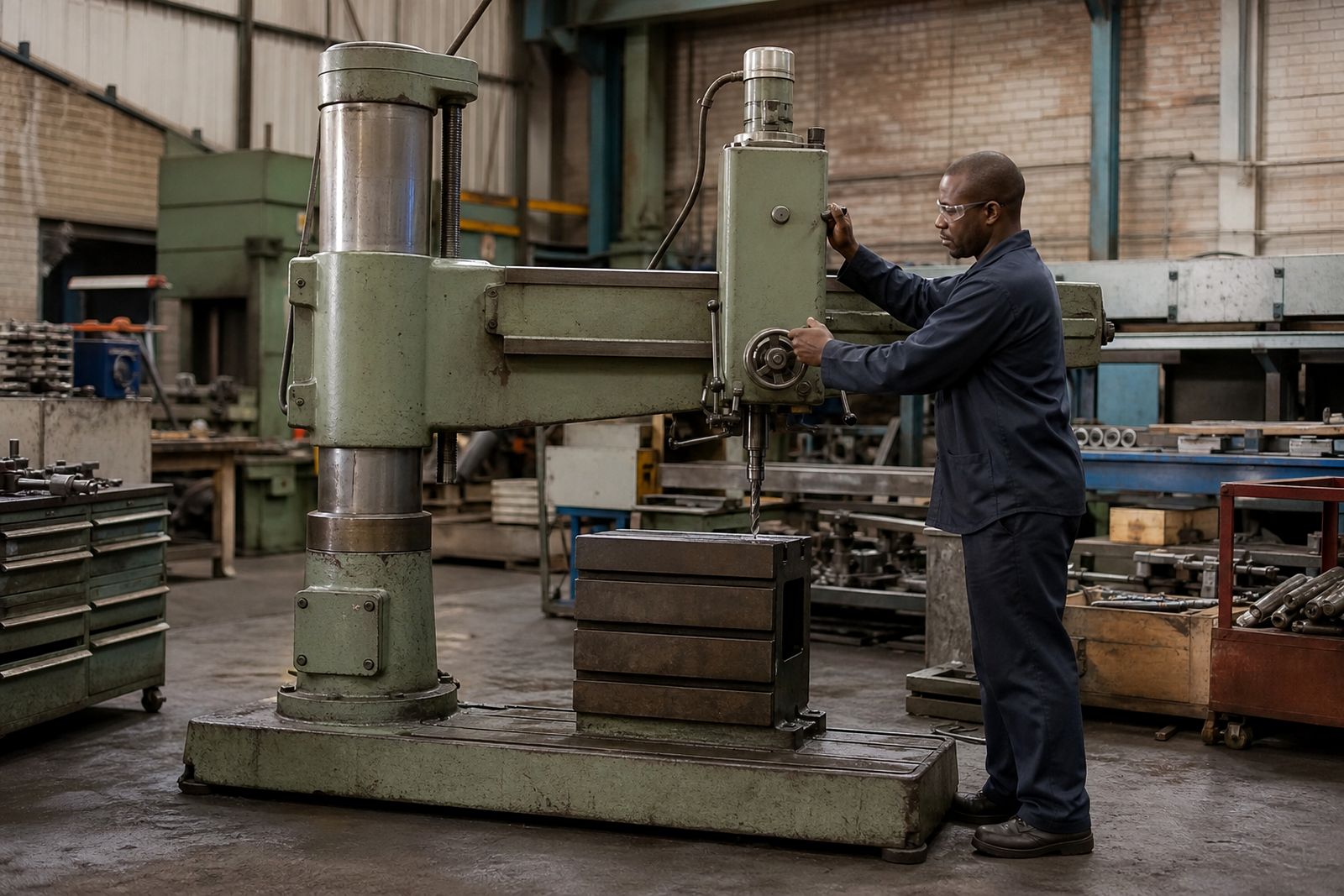
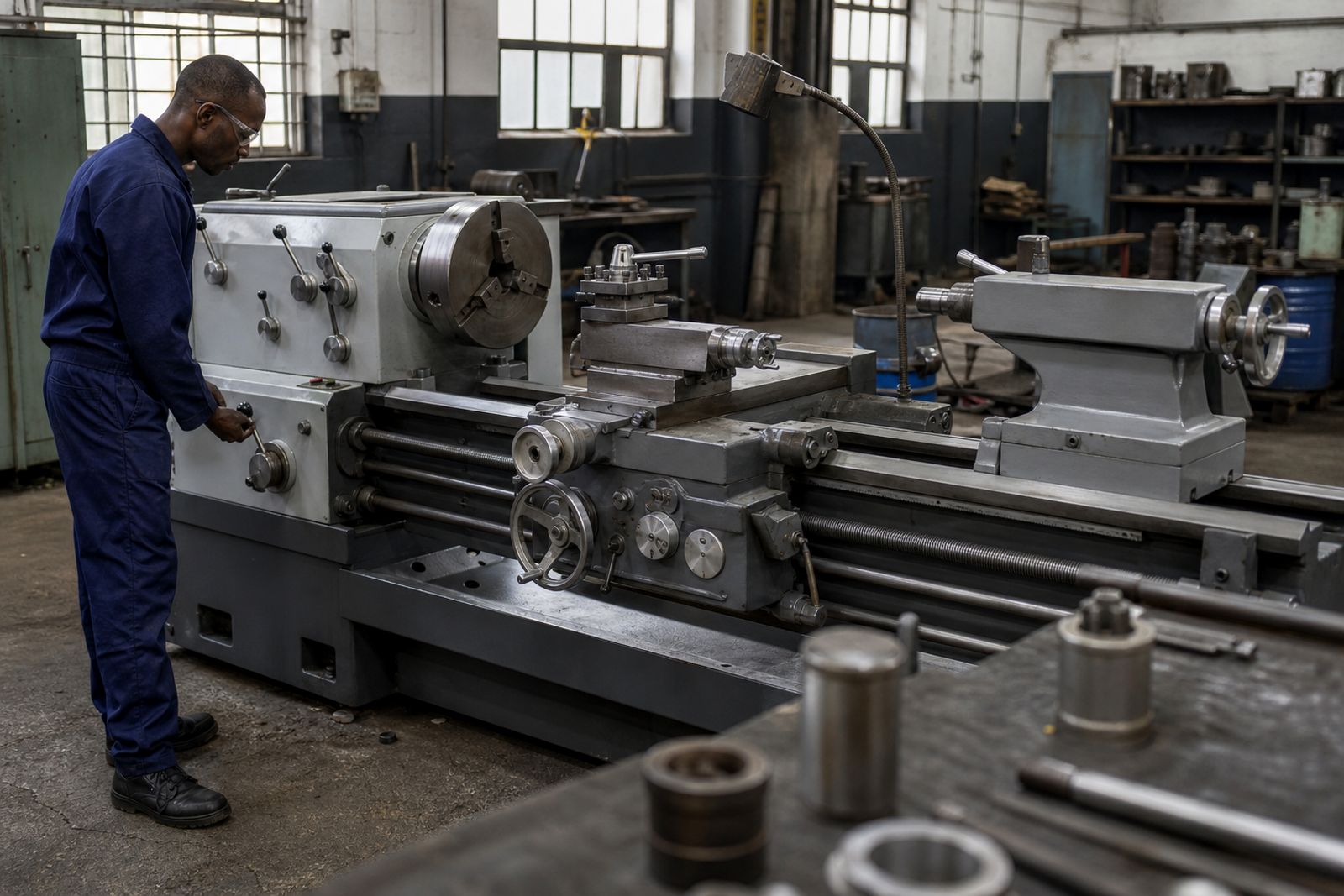
First-run record, radial drill and engine lathe
What our machine customers say
Verified Google reviews