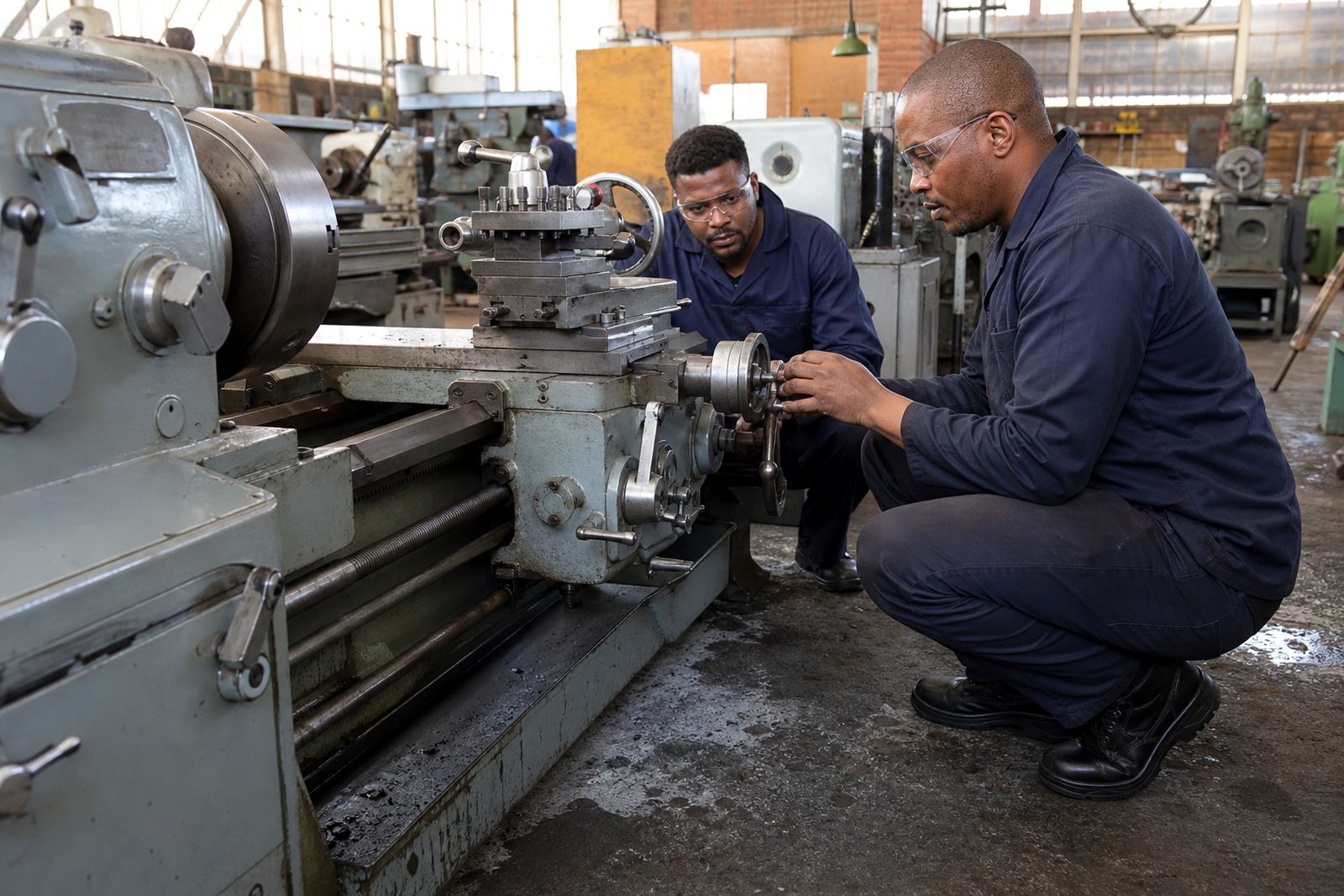

First-run record
Opening readings, switch checks and early observations belong in one first-run record. Kept together, they show what the machine did on its first day, before later settings change the picture.
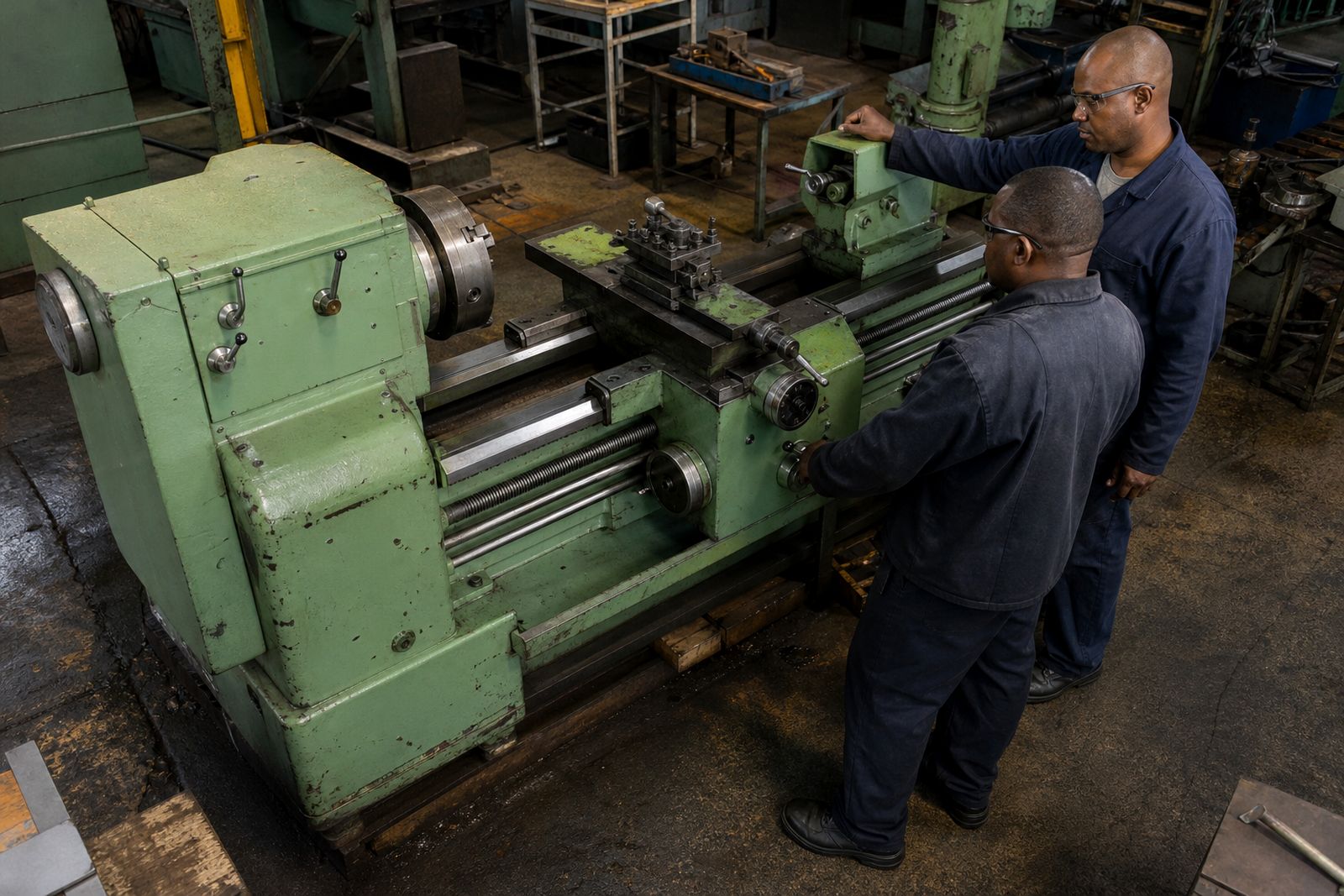
Match the machine identity
Machine identification must match the quotation, delivery paperwork and any plate fitted to the machine. A mismatched name or serial reference can delay spares questions after the first run.
Write down the machine type, make, serial reference, control type and accessories fitted at the start. Loose items, guards, chucks, steadies, arbors and manuals must be named in words, not grouped together.
Measure the supply first
Electrical notes must record the incoming voltage, phase, plug or isolator arrangement and motor plate details. Air-fed machines also need the available pressure and connection type written down before movement starts.
Coolant pumps, hydraulic packs and lubrication pumps need separate entries because each unit can have its own motor and rotation direction. A wrong rotation note is easier to trace than a vague comment after a fault.
Service entries on the first-run sheet need written readings at the machine:
- The incoming electrical supply measured at the machine isolator.
- The motor plate information copied from each fitted drive unit.
- The air supply reading taken at the machine connection point.
- The coolant, hydraulic and lubrication levels recorded before movement.
Note movement and lubrication
Axis travel entries should state the direction tested, the control used and the end position reached. Slides, screws, tables and quills need clean movement notes without forced travel past tight spots.
Lubrication records must name the oil points filled, sight glasses seen and pumps operated. Spindle, feed and hydraulic noise should be described in plain words, with the speed range noted as tested rather than approved.
Compare safety functions
Guarding, emergency stops, interlocks and foot controls need written entries against the fitted machine features. Missing labels, loose switches and damaged cables belong on the record before production work begins.
Final notes should separate machine readings from operator comments. A clear record gives your fitter, electrician or technician the figures needed for later fault tracing and repair work.
What our machine customers say
Verified Google reviews