
Starter floor
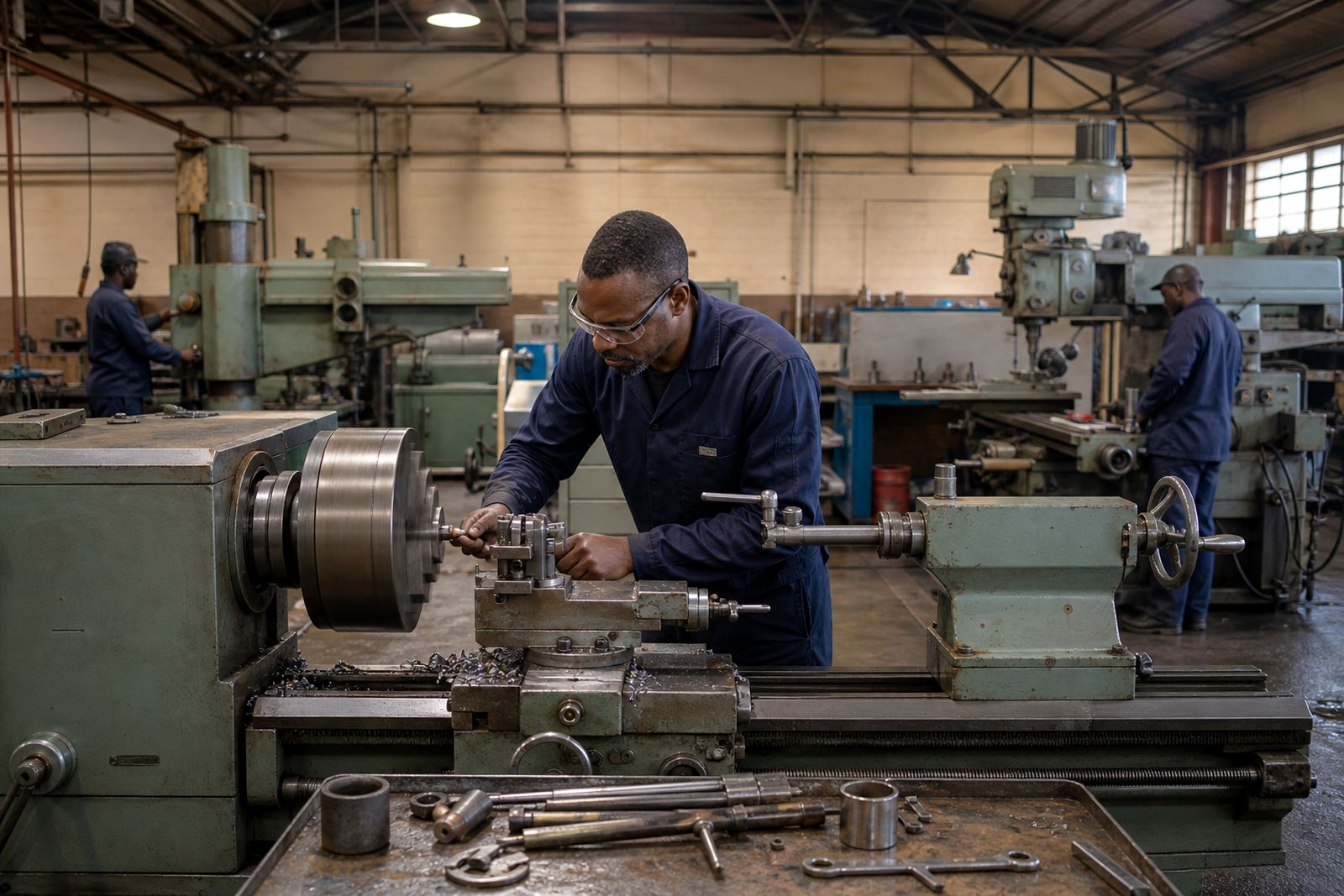
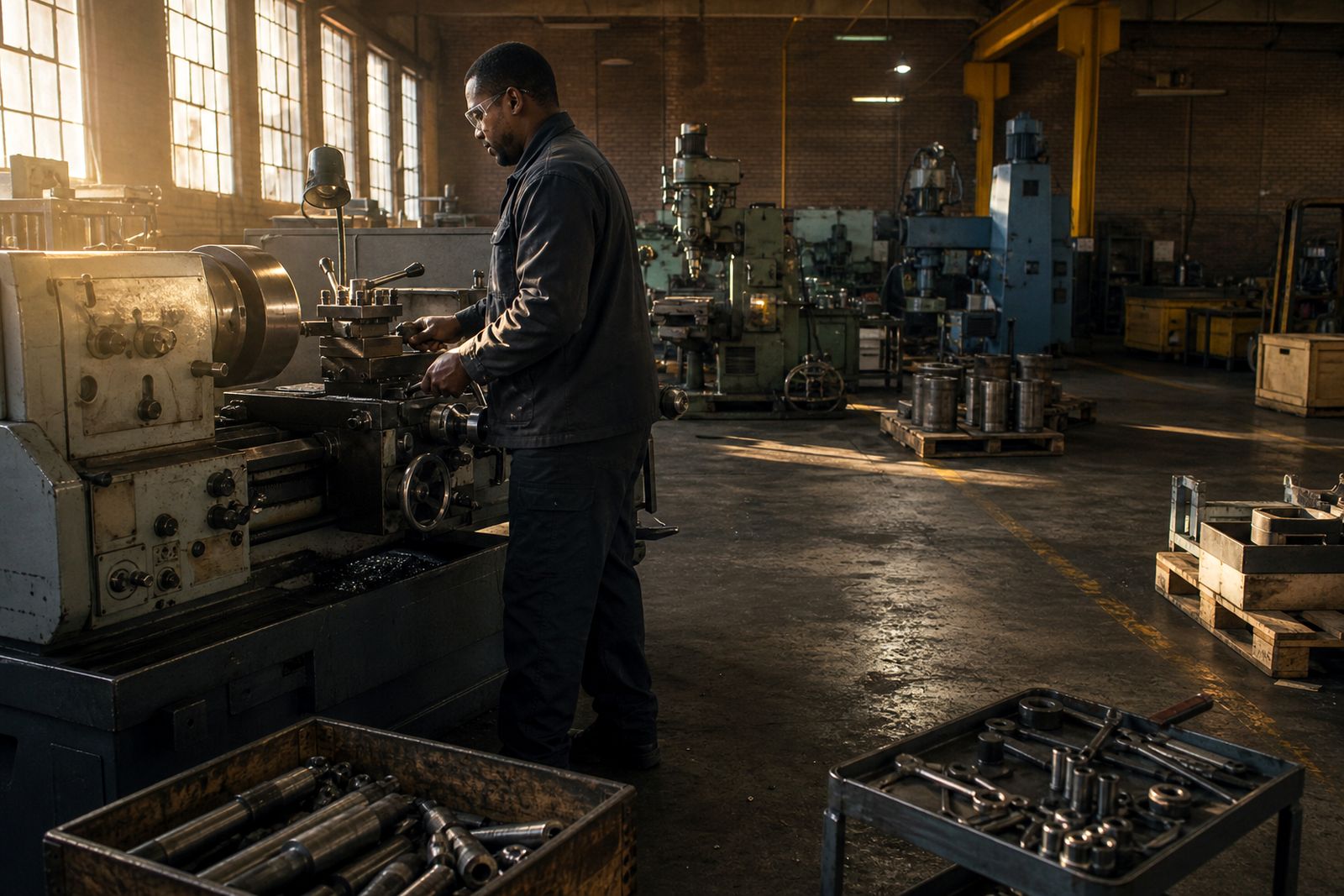
Choosing a first metalworking machine, such as a centre lathe or valve grinder, sets the pattern for a new workshop floor. The choice starts with the repair work, the largest part size and the power supply already planned for that bay.
Selecting the first machine
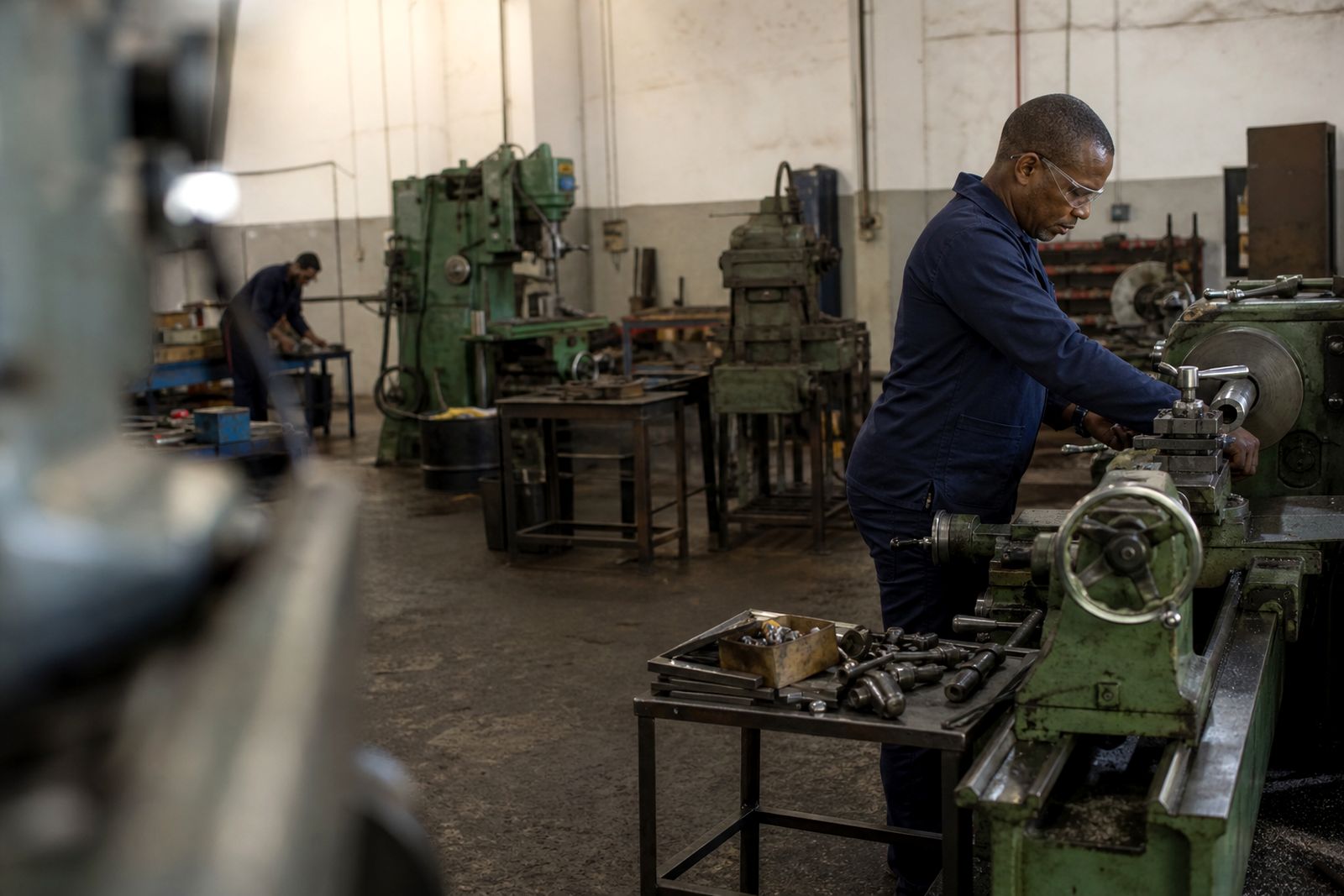
One centre lathe covers shafts, pins, bushes and facing work where an operator controls the cut by hand. Valve grinding equipment belongs with cylinder head work where stem, face and seat contact need matching checks.
Job scope sets the comparison between swing, distance between centres, spindle bore and tooling. Grinding dust, welding spatter and uncovered storage space affect open slides, leadscrews and coolant trays on an early purchase.
Work figures to record
Measurements describe the work envelope and the intended machine position:
- Part diameter, part length and workpiece mass planned for first jobs.
- Material range, cut type and accuracy level expected from turning or refacing work.
- Supply details at the intended machine position, including voltage, phase and breaker size.
- Doorway clearance, floor area and lifting arrangements.
Tooling condition checks
Chucks, centres, toolposts, guards and coolant parts change the true starting cost of a used lathe. A valve grinder also needs its stones, holders and dressing parts matched to the cylinder head work.
Gear levers, feed controls, slide movement and spindle noise need written comments during a purchase discussion. Electrical connection planning can depend on voltage and speed data from the motor plate.
First floor planning
Position the machine where swarf removal, coolant handling and tool access do not block other repair work. Clear space around the tailstock end prevents short machines becoming awkward on longer shafts.
What our machine customers say
Verified Google reviews